

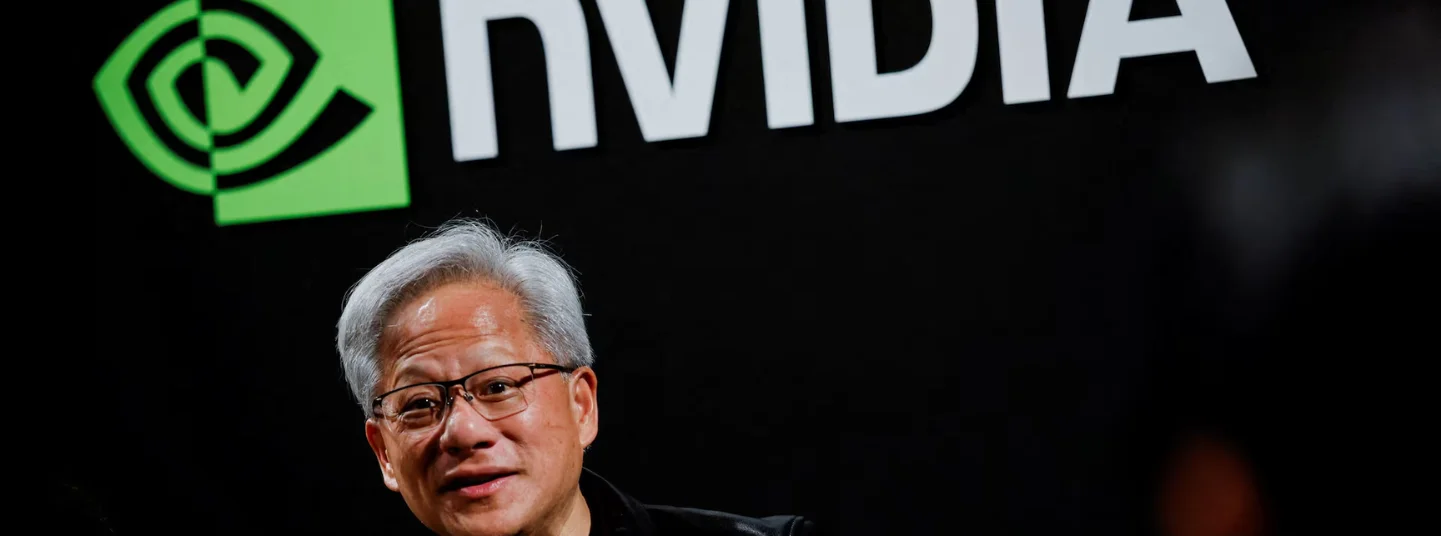
Jensen Huang resigned as president, chief executive and director of Nvidia on 12 November 2026, ending 33 years at the company he co-founded. His exit followed reports of three extramarital relationships, one of them with a woman US intelligence officials believe is a Chinese spy. Chief financial officer Colette Kress is interim chief executive while the board searches for a permanent successor, and Harvey Jones has become Nvidia's first-ever board chair.
The timing matters. AI stocks were already falling before the scandal broke, on worries about funding, regulation and returns, and Nvidia reports quarterly results on 17 November. This article looks at what Huang's departure changes, what it leaves in place, and how the effects travel through global markets, the world economy and India.
What did Huang's exit actually do to markets?
Nvidia shares fell as much as 14.3% during trading on 12 November and closed 4.3% lower. The company's market value dropped below US$4 trillion for the first time since July 2025, after losing more than US$1 trillion over the past month. Buyers also stepped in quickly: retail investors bought a net US$111 million of Nvidia stock in the first half-hour of trading, the largest opening bid in Vanda Research's records.
The selling spread to companies that depend on Nvidia's chips and money. AI cloud providers and server makers fell sharply, while rivals AMD and Broadcom gained more than 4% each as investors looked for openings for competitors. Tech stocks in Japan, South Korea and Europe slipped by around 1%.
Company | Move | Reason cited |
|---|---|---|
Nvidia | Down 4.3% at close (down 14.3% at worst) | Chief executive resigns |
Nebius | Down about 18% | Cut its 2026 revenue outlook |
Super Micro Computer | Down 12% | Report of a possible Justice Department probe linked to the same case |
CoreWeave | Down about 8% | Close financial ties to Nvidia |
AMD and Broadcom | Up more than 4% each | Seen as gaining from turmoil at Nvidia |
The correction began a week earlier
On 5 November, after Democrats won both chambers of Congress in the midterm elections, the Nasdaq Composite fell 5.52% and closed 11.9% below its 6 October record. Investors feared tighter oversight of data centre construction. Huang's resignation landed on a market that was already re-pricing the AI trade.
See what markets are pricing in
Live indices, sector moves and market breadth — the backdrop to every story we publish.
Why does one chief executive matter so much to Nvidia?
Huang ran Nvidia as its chief allocator. For about three years, Nvidia's data centre chips were among the scarcest products in the world economy, and Huang decided which customers received them and when. That gave him direct influence over which AI labs, cloud providers and countries could build at scale.
He also made Nvidia a financier of its own customers. By July 2026, Nvidia held US$99 billion of equity investments, with a further US$25 billion committed. It put about US$30 billion into OpenAI and agreed a conditional guarantee of up to US$105 billion on 20-year data centre leases in Ohio that will host OpenAI's computing. The Economist has described the company as the central bank of AI. These arrangements support demand for Nvidia's chips, and they leave risk on Nvidia's balance sheet if that demand weakens.
The new question is who signs the next cheque
Kress oversaw these deals as chief financial officer. As interim chief executive, she now decides how many more to make. Huang had said he did not believe in succession planning, so Nvidia has no designated heir, and some analysts estimate the company would be worth 25% to 30% less without him. A finance-led Nvidia is likely to be more careful with vendor financing. That would slow the flow of credit to smaller AI cloud firms that depend on it.
Is the demand behind the AI boom still intact?
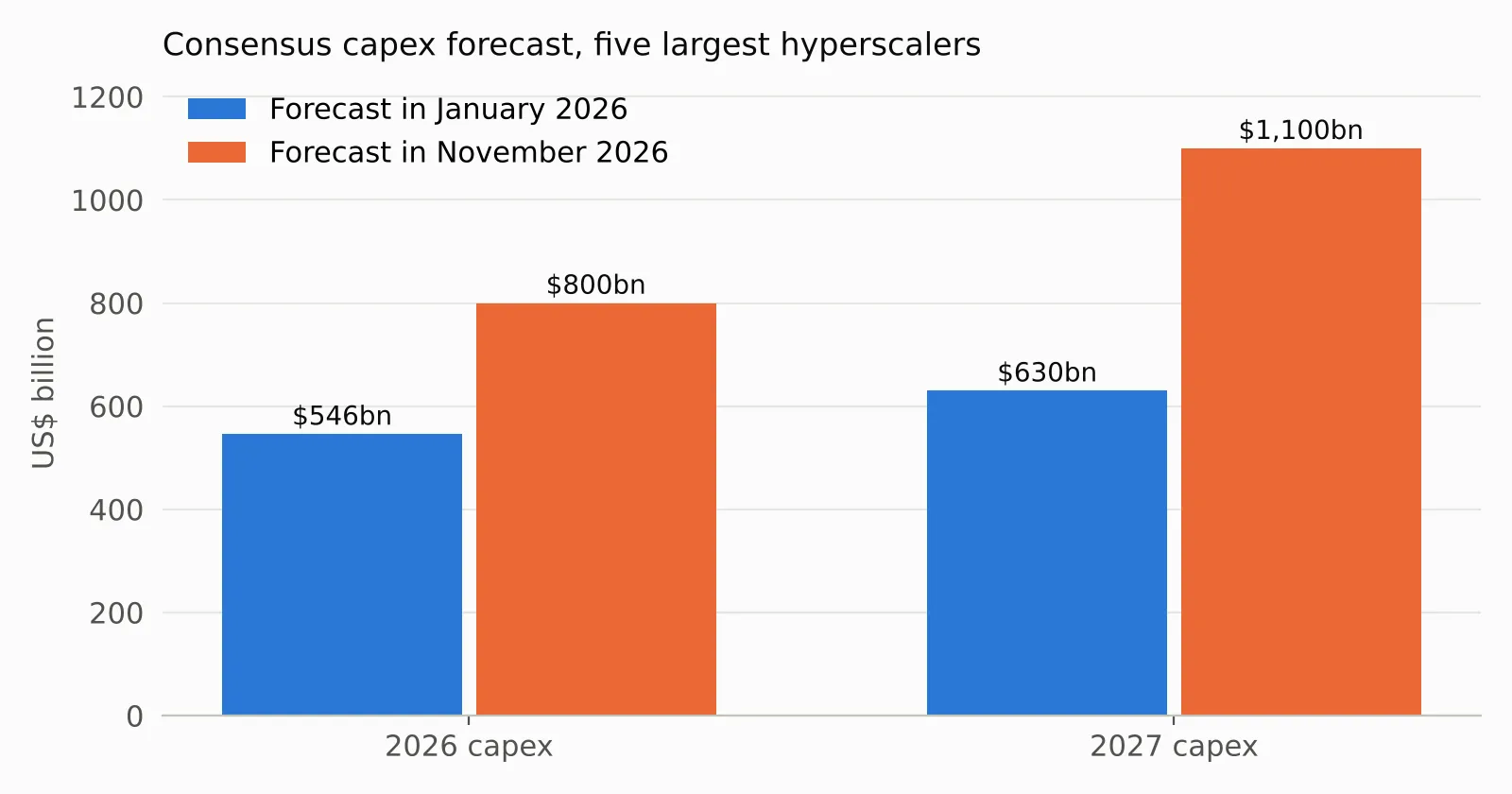
Yes, on the figures available today. The orders that fund the boom come from the largest technology companies, and their spending plans have kept rising through 2026. Nvidia's revenue grew 106% year on year in its last reported quarter. Its shares now trade at about 12 times forward earnings, the lowest multiple since 2012. Huang said in March that he expected at least US$1 trillion of demand for Nvidia chips through 2027. Those orders were placed by customers, and they remain on the books after his departure.
The weak point is financing
Barclays has argued that AI demand remains strong while the market questions how it is paid for, since cloud companies keep raising spending as their free cash flow shrinks. Alphabet reported negative free cash flow of US$9.1 billion in the third quarter. Investor Michael Burry argues that AI chips are depreciated over too many years, which flatters reported profits, and expects write-downs between 2026 and 2028. Other analysts point to two longer-term threats: more efficient AI models that need fewer chips, and custom chips designed by Nvidia's own customers, which Bloomberg Intelligence expects to reach about half of the AI processor market by 2030.
Huang's exit changes none of these numbers directly. It removes the person most able to persuade investors to look past them.
How far can a shock at Nvidia travel through stock markets?
A long way, because a large share of the market rests on the same theme. Nearly half of the S&P 500's value is tied to AI developers or their suppliers. Morgan Stanley estimates that spending by cloud and AI infrastructure companies will account for 5% of S&P 500 revenue in 2027 while driving about 25% of the index's revenue growth, with close to US$700 billion of that spending going to Nvidia.
This concentration means index investors carry Nvidia risk whether they chose it or not. It also explains why AI hardware markets such as Taiwan and South Korea moved with Nvidia this month. As our earlier analysis of semiconductor geopolitics set out, Taiwan makes about 90% of the most advanced logic chips and South Korea about 80% of high bandwidth memory. Their stock markets and export earnings follow Nvidia's order book closely.
A correction differs from a collapse
When the dot-com bubble burst, the Nasdaq fell 78% over two and a half years, even as internet use kept growing. The current fall is a correction of roughly 12% to 15% from the October high. The test over the coming months is whether cloud companies cut their 2027 budgets. A cut would reach chip makers first and the wider index soon after.
Get research like this in your inbox
The week’s research that mattered, in five minutes. Joined by 2L+ investors.
What does the world economy have riding on this?
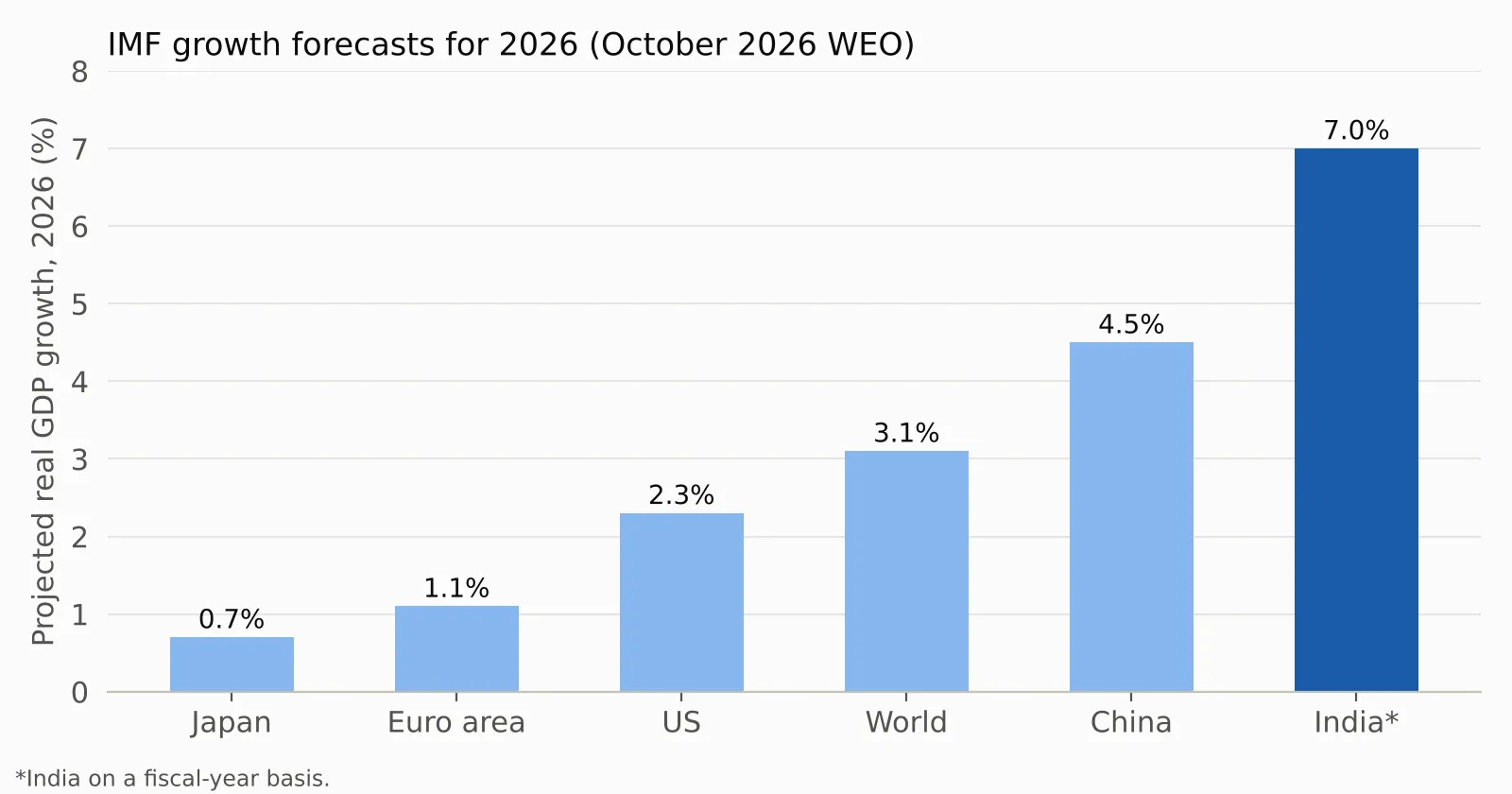
A great deal. The IMF's October World Economic Outlook raised its 2026 global growth forecast to 3.1% and credited AI investment with offsetting the energy shock from the war in the Middle East. Growth has also become narrow: 32 economies now account for 95% of global growth, down from 54 in April. The Fund modelled a moderate correction in AI valuations and found it would cut global output by about 0.4%, enough to erase the whole upgrade made since July.
The China dimension adds political risk
Huang's departure carries a national security question that reaches beyond Nvidia. US rules in force since January 2026 allow approved Chinese buyers to receive H200-class chips, with 25% of the revenue paid to the US government. An investigation into Huang's links to an alleged Chinese intelligence operative will bring that licensing regime under fresh scrutiny in Washington, where Huang has agreed to testify before Congress. Tighter export rules would reduce Nvidia's China sales and could prompt Beijing to respond through its controls on rare earths and other materials that chip makers need.
Why is foreign money flowing into India as AI stocks fall?
Because India has been the main source of funds for the AI trade, and that trade is now unwinding. Global investors sold a record ₹3.05 lakh crore of Indian shares in the first nine months of 2026 and moved the money into US technology stocks and the chip markets of Taiwan and South Korea. India has few listed companies that sell AI hardware, so its shares were the natural ones to sell.
The AI sell-off has reversed that flow. Foreign portfolio investors bought ₹53,739 crore of Indian equities in the first nine days of November, after two months of selling, and the Nifty rose 7.58% in the first week of the month. V K Vijayakumar of Geojit Investments describes India as a non-AI trade that has become attractive as AI markets fall, helped by solid earnings growth and reasonable large-cap valuations. India's weight in the MSCI global standard index has risen to 13.1%.
Domestic pressures still set the ceiling
The rotation leaves India exposed to global risk and to its own pressures. On 13 November the Sensex fell 319 points after retail inflation rose to 6.09% in October and investors began to expect an RBI rate increase in December. Brent crude near US$95 a barrel and a rupee near 94 to the dollar keep import costs high. Despite November's inflows, net foreign selling for 2026 still stands at about ₹2.41 lakh crore.
Where does India still depend on Nvidia?
Almost everywhere in its AI build-out. Yotta Data Services is investing more than US$2 billion to deploy 20,736 Nvidia Blackwell Ultra chips and has committed over 10,000 of them to the government's IndiaAI Mission. Reliance and L&T deployments run on Nvidia hardware, and Nvidia has invested in the Indian AI start-up Sarvam. Most of the Indian AI models presented at the AI Impact Summit in February were trained on Nvidia chips hosted by Yotta.
Channel | What is happening | Effect on India |
|---|---|---|
Portfolio flows | Funds leave AI-heavy markets | Foreign inflows support the Nifty and the rupee |
Chip supply | Leadership change at the dominant supplier | Possible delays to Yotta and IndiaAI Mission timelines |
Data centres | Reliance, Adani and global firms are building capacity | Investment continues if hyperscaler budgets hold |
IT services | Clients reassess AI budgets | Slower signing of AI implementation contracts |
Economy | IMF projects 7.0% growth, partly on AI investment | Exposure to a global AI correction through investment |
Disruption could widen India's supplier base
The schedule for Yotta's larger cluster had slipped before Huang resigned, so some delays predate the scandal. A period of uncertainty at Nvidia gives Indian buyers a reason to test chips from AMD and from cloud providers' in-house designs. The Semicon 2.0 programme, which added US$13 billion in July for domestic chip production starting at 28 nanometres, works at a different layer of the supply chain. It reflects the same aim of reducing reliance on any single supplier.
Is your portfolio built for what’s coming?
Get a free AI-powered review of your holdings — risk, overlap and quality in minutes.
So will Huang's exit cripple the AI boom?
On present evidence, no. The orders, budgets and contracts that drive the boom belong to Nvidia's customers, and they remain in place. What the exit removes is the person who set the pace of AI investment, rationed scarce chips and extended credit to keep projects moving. Without him, the boom depends more heavily on whether its financing holds up under scrutiny.
For India, the near-term effect is positive, with money leaving AI-heavy markets and arriving in Indian equities. The longer-term picture is mixed. India's growth forecast and its data centre plans both rely on a steady supply of AI chips and continued global investment. A slower, more cautious AI cycle would keep foreign money moving toward India while delaying the infrastructure the country is trying to build.
What to watch next
Nvidia's results on 17 November, and any change to its outlook under Kress.
The choice of a permanent chief executive, and whether the board picks an insider or an outsider.
Cloud companies' 2027 spending plans, the clearest signal of underlying demand.
Congressional hearings and any tightening of chip export rules to China.
Monthly foreign flow data, crude prices and the RBI's December policy decision.


