


Why Are Mid and Small-Cap Stocks Crashing in 2025?
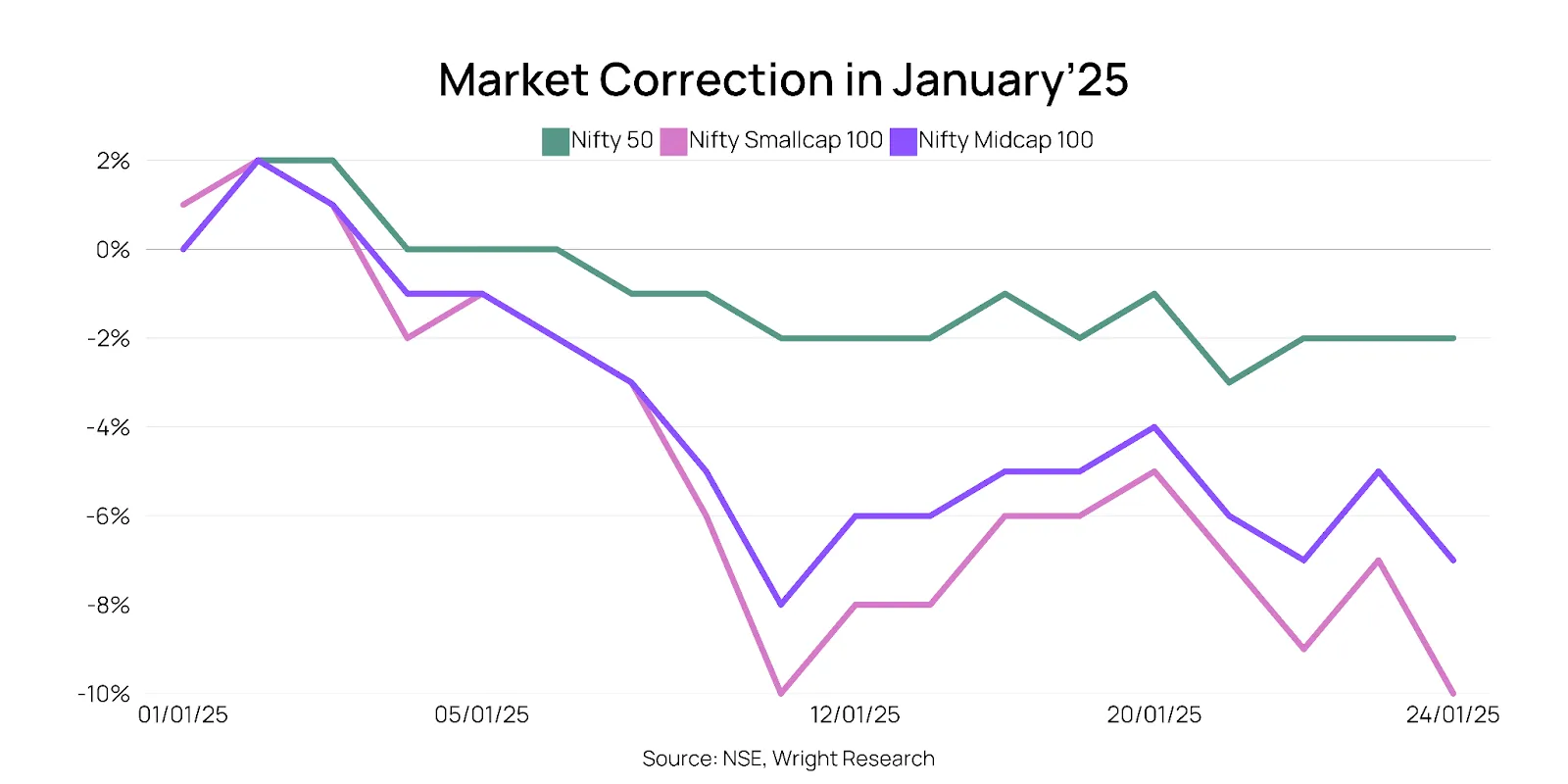
2025 has started on a sour note for mid and small-cap investors, with the Nifty Midcap 150 index down 7% and the Nifty Smallcap 250 index slipping 9% so far. In contrast, the Nifty 50 has been relatively resilient, losing just around 2%. This divergence reflects broader market dynamics and investor sentiment favoring safety amid uncertainty. Notably, 70% of small- and mid-cap stocks are trading below their 200-day moving averages, signaling sustained selling pressure.
What Is Causing This Downturn?
The ongoing correction in mid and small-cap stocks can be attributed to a mix of valuation concerns, macroeconomic challenges, and shifting investor preferences.
1. Years of Outperformance Have Led to Overvaluation
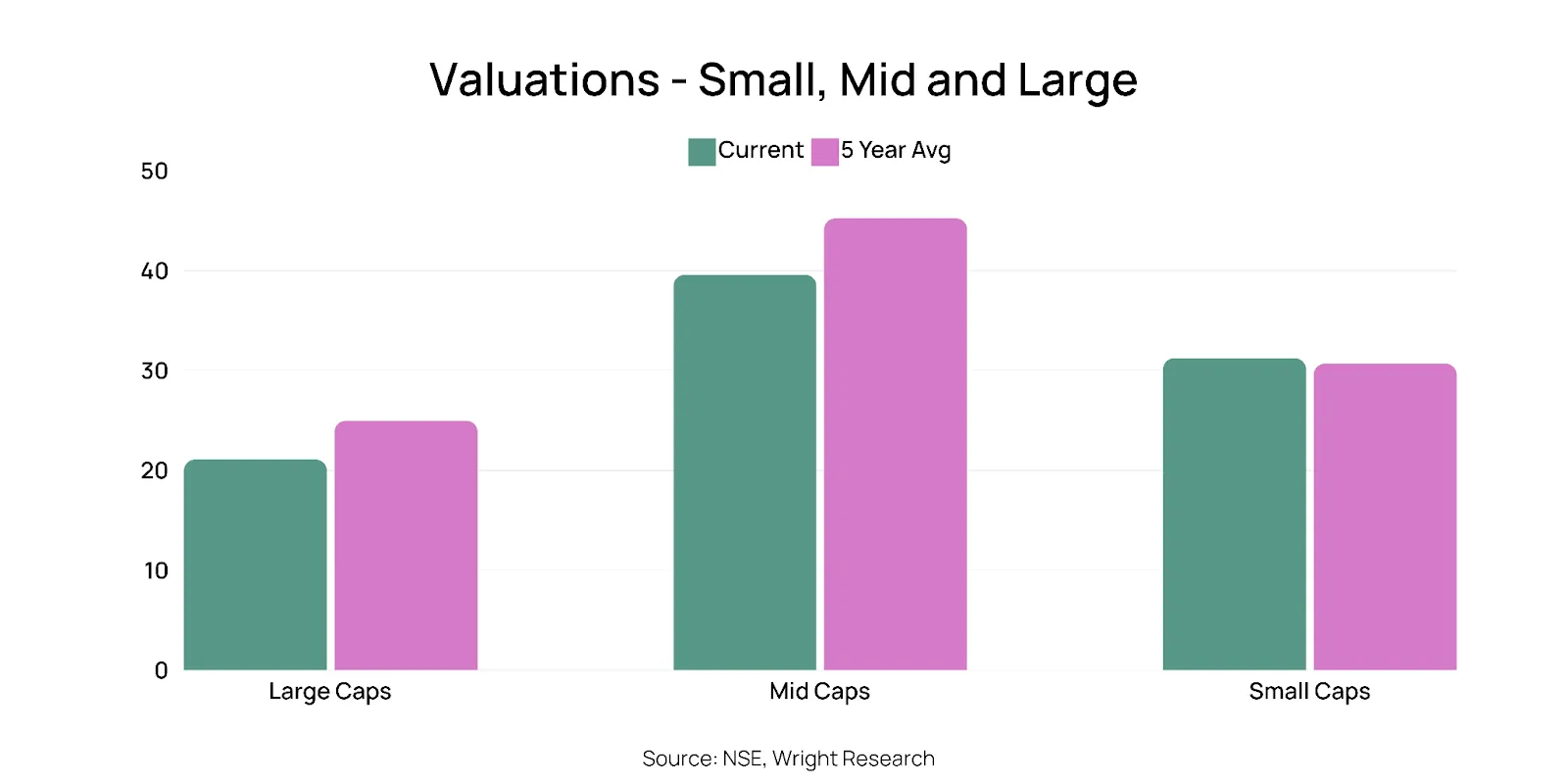
Valuation Premiums: Over the last few years, mid and small-cap stocks experienced a stellar rally, making them trade at a significant premium to large-cap indices. As of 2025, the Nifty Midcap’s next-twelve-month (NTM) P/E ratio is 58% higher than that of the Nifty 50, as reported by BNP Paribas Securities. These elevated valuations, while justified during the earlier growth phase, have now become unsustainable, especially in the absence of fresh growth triggers.
Profit Booking: The extended rally of 2023-24 saw many small- and mid-cap stocks outperform large-cap peers. This has prompted significant profit booking by retail and institutional investors, accelerating sell-offs in these segments. As valuations adjusted downward, investor sentiment weakened further, creating a cascading effect across broader markets. In such scenarios, even fundamentally strong stocks have not been spared as fear-driven selling continues to dominate.
2. RBI's Hawkish Stance and Liquidity Tightening
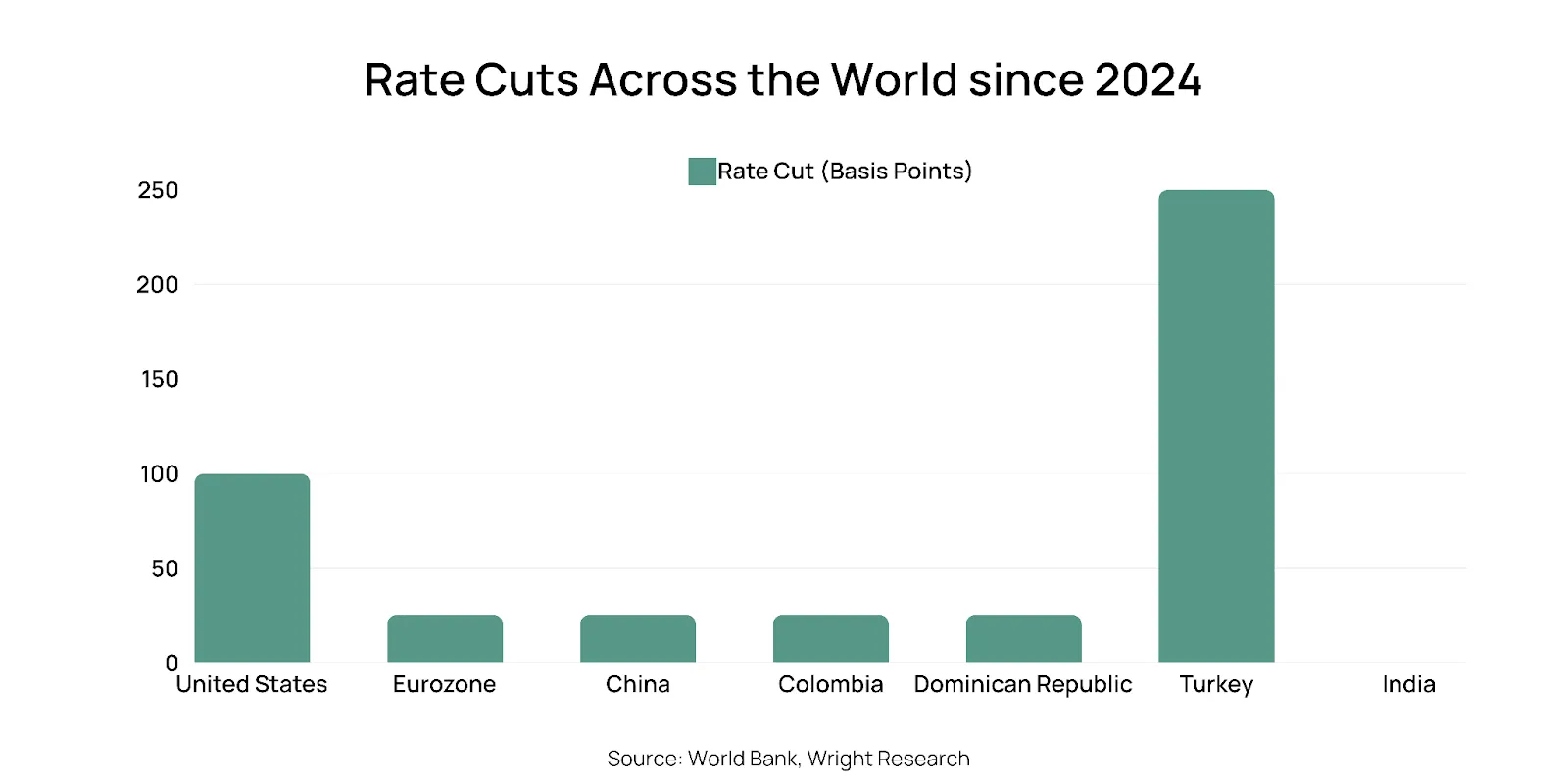
While many global central banks have begun cutting rates to stimulate growth, the Reserve Bank of India (RBI) has maintained a hawkish stance, citing persistent inflation risks. This policy has led to:
Increased Borrowing Costs: High interest rates have made financing expensive, particularly for rate-sensitive sectors like real estate, infrastructure, and MSMEs. Companies in these sectors are finding it challenging to access affordable credit, leading to delays in projects and reduced growth momentum.
Shift to Fixed-Income Investments: Elevated rates have made fixed-income instruments, such as bonds and fixed deposits, more attractive compared to equities. This shift in investor preference has reduced liquidity inflows into mid and small-cap stocks, amplifying the downward pressure on these indices.
Additionally, the RBI's stance has contributed to a Liquidity Crunch:
Rising bond yields have tightened monetary conditions, making it difficult for businesses and investors to access capital at reasonable costs.
The reduced availability of liquidity has further dampened sentiment, especially for high-beta stocks, which are more volatile and dependent on steady capital flows.
The combination of high interest rates and restricted liquidity has exacerbated the challenges faced by mid and small-cap segments, making them particularly vulnerable in the current environment. With no immediate signs of policy easing, these pressures are likely to persist in the near term.
3. Sustained FII Selling and Rupee Depreciation
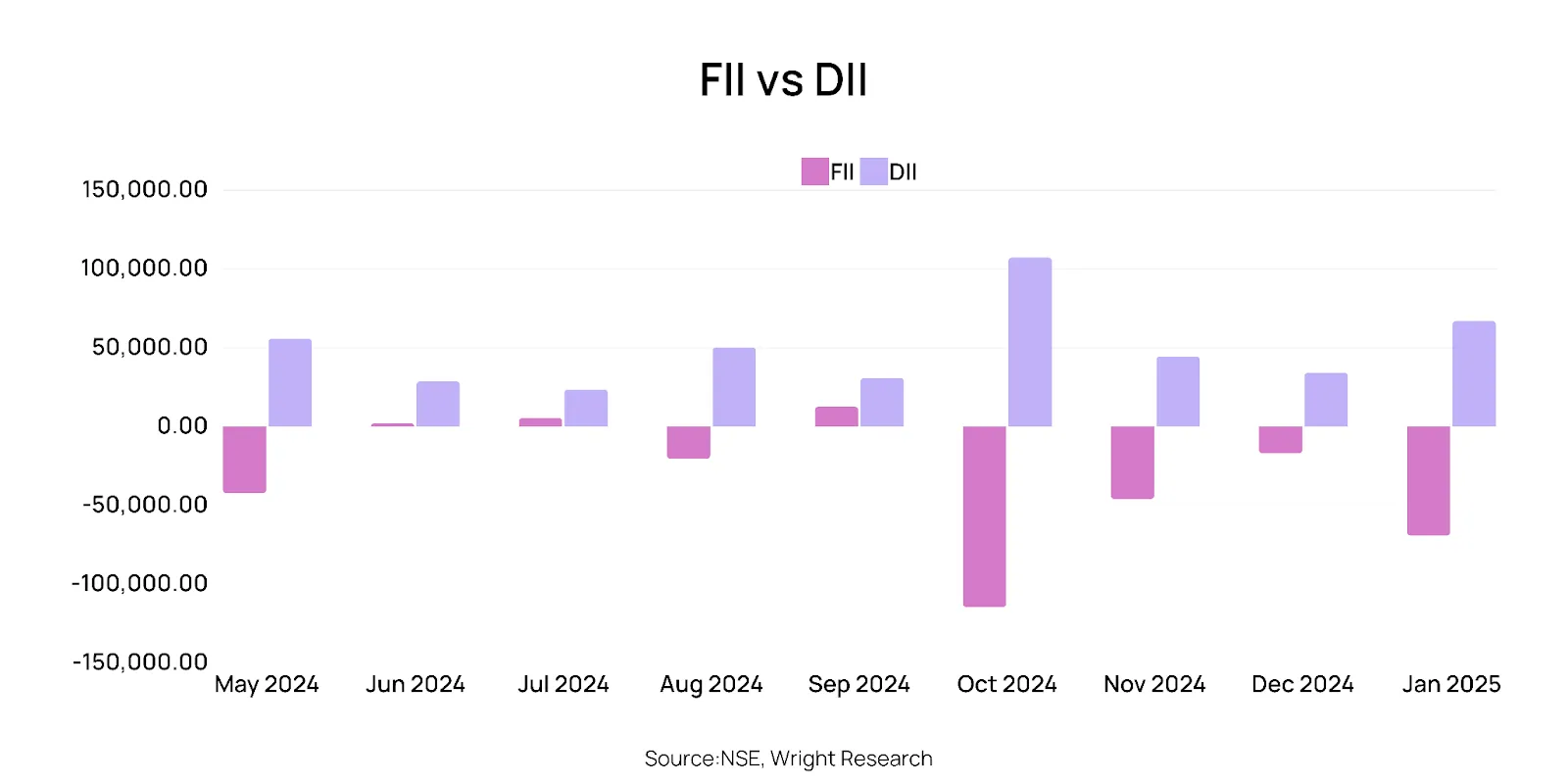
Foreign Institutional Investors (FIIs) have been consistent sellers, pulling money out of Indian equities amid global uncertainty and a stronger US Dollar. This trend has:
Pressured the Indian Rupee: The rupee has depreciated significantly, hovering near record lows, increasing India's import bill and worsening the trade deficit. This has also made it harder for companies with foreign currency-denominated debt to manage costs.
Reduced Attractiveness of Indian Markets: The stronger US Dollar, along with the Federal Reserve’s tight monetary policy, has diverted FII flows to the US and other developed markets offering better risk-adjusted returns. Comparatively, emerging markets like Indonesia and Vietnam, which have shown stronger growth and relatively stable currencies, have become more appealing.
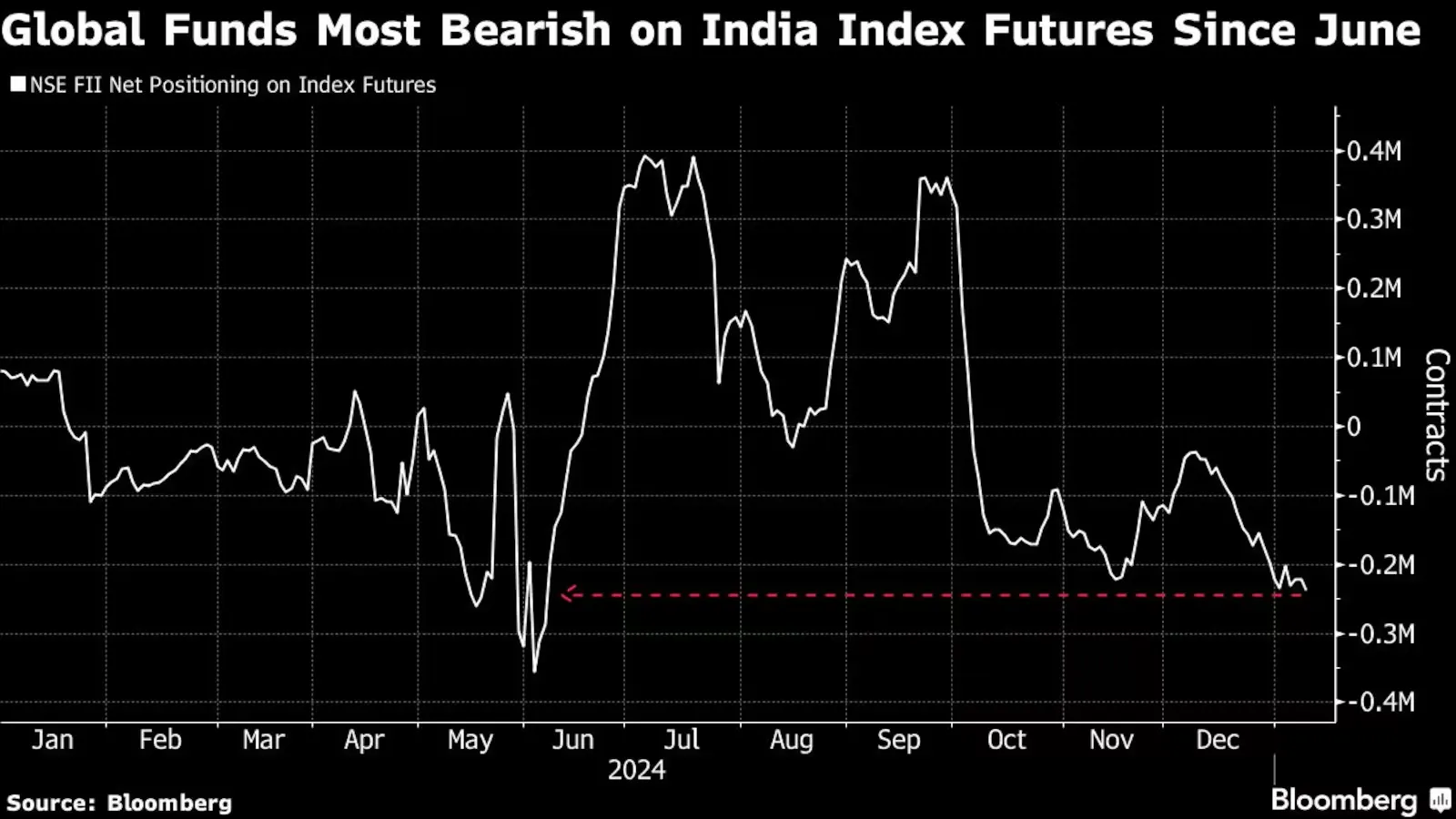
In contrast, Domestic Institutional Investors (DIIs) have stepped in to fill the gap left by FIIs. DIIs, driven by robust inflows from retail investors via SIPs (Systematic Investment Plans), have been net buyers in the equity markets. This has provided some stability to large-cap indices, which remain relatively resilient. However, their support has been insufficient to prevent broader market declines, particularly in mid and small-cap segments, where the selling pressure has been more pronounced.
4. Global Macroeconomic Pressures
High Crude Oil Prices: Ongoing geopolitical tensions in the Middle East have driven up crude oil prices, adding to India’s import bill and worsening the trade deficit. This situation has not only increased inflationary pressures domestically but has also raised costs for industries reliant on fuel and petroleum-based inputs. Sectors like transportation, chemicals, and logistics have seen profitability decline due to escalating operational costs. Additionally, higher crude prices reduce disposable income for consumers, impacting demand for discretionary goods.
Weak Global Demand: Export-driven sectors, such as IT, textiles, and industrials, are facing mounting pressure as demand slows in key markets like the US and Europe. The US Federal Reserve's tight monetary policy and economic uncertainty in Europe have curbed consumer spending and industrial activity, leading to reduced orders for Indian exporters. This has particularly affected companies reliant on large overseas clients. Furthermore, the slowdown in global demand has a cascading effect on domestic supply chains, amplifying the challenges for ancillary industries. With global economic recovery expected to be uneven, the headwinds for export-oriented sectors are likely to persist, adding to the market's overall bearish sentiment.
5. Earnings Downgrades and Sector-Specific Weakness
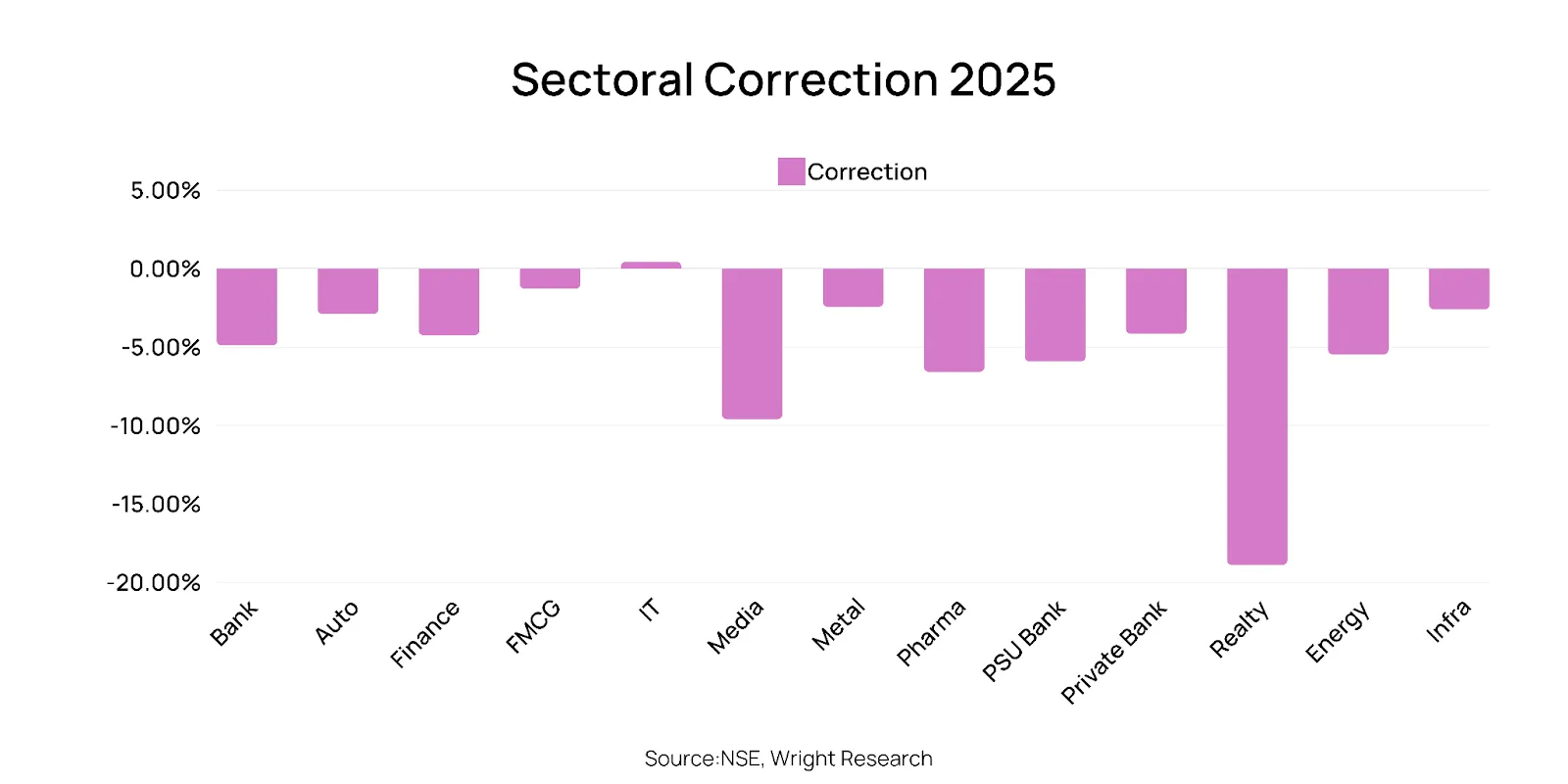
Companies in urban consumption and export-oriented sectors have reported muted earnings and downgraded guidance, reflecting a slowdown in both domestic and global demand. Urban consumption has been significantly impacted by inflationary pressures, which have reduced disposable incomes and curbed discretionary spending. This is particularly evident in the consumer goods sector, where companies have reported weaker sales growth and declining margins.
The real estate sector, traditionally a strong performer in growth cycles, has faced headwinds due to higher borrowing costs and subdued demand for housing in urban centers. Small finance banks, which cater to niche lending markets, are experiencing increased non-performing assets (NPAs) as borrowers struggle to meet repayment schedules amidst an inflationary environment.
Export-oriented industries, including textiles and IT services, are grappling with slowing global demand and tighter budgets from key international clients. This slowdown has cascaded into ancillary sectors, such as logistics and transportation, further amplifying the challenges. The overall economic environment remains fragile, with companies cutting down on capital expenditure and expansion plans, leading to a broader deceleration in growth.
While some of these sectors are expected to recover in the medium to long term, the immediate outlook remains bleak, with persistent inflation, weak global demand, and cautious consumer sentiment keeping earnings growth under pressure.
6. Budget 2025 Expectations Adding to Uncertainty
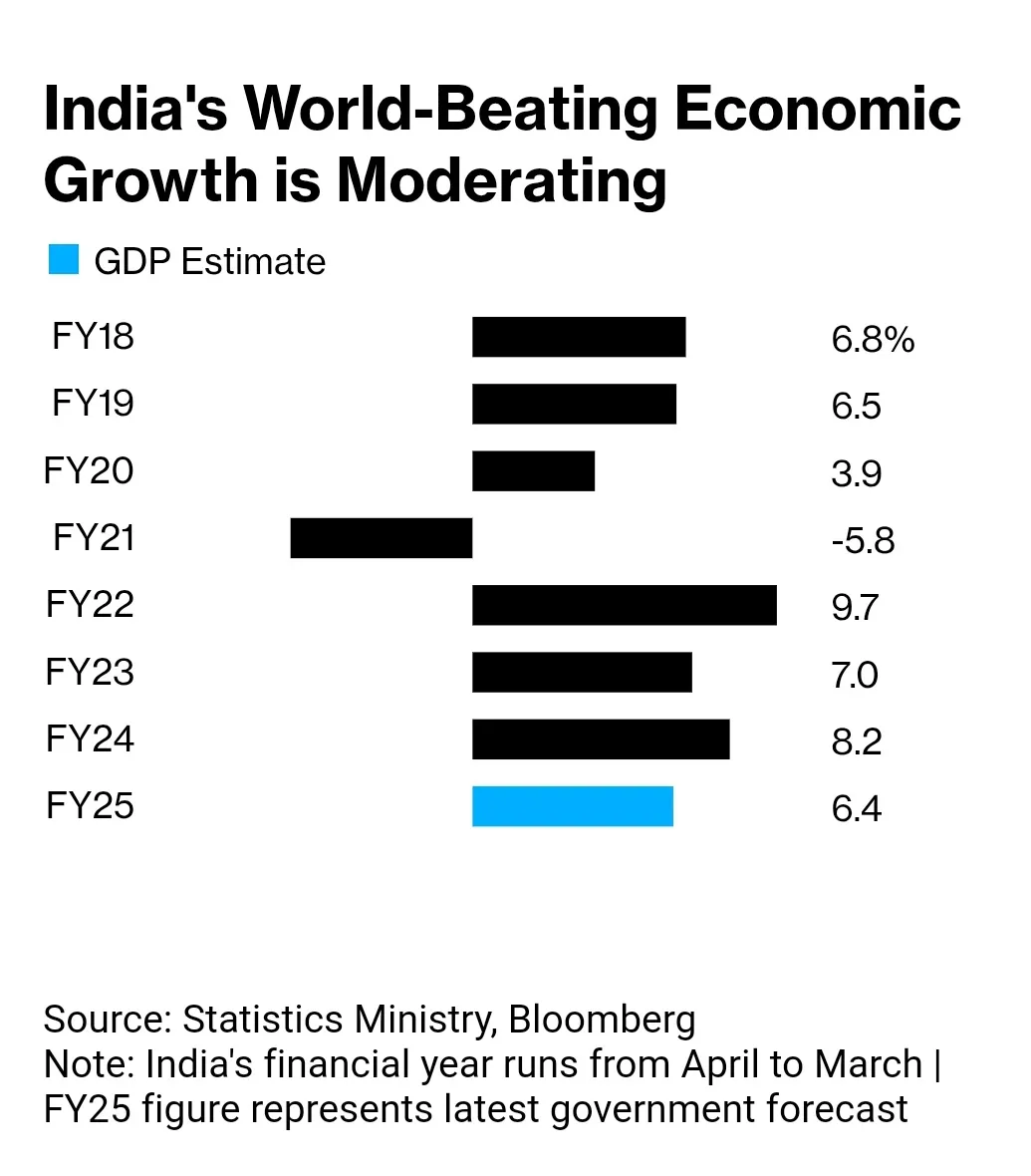
Fiscal Conservatism: The upcoming budget is expected to maintain a fiscally tight approach, as the government prioritizes reducing the fiscal deficit to 4.5% of GDP by FY26. This strategy aligns with India’s medium-term fiscal consolidation goals but has led to tempered investor expectations, particularly in infrastructure and capex-heavy sectors, which rely on robust government spending to sustain growth momentum. The lack of significant fiscal room limits the potential for large-scale stimulus measures or policy interventions that could drive immediate growth.
Sectoral Implications: Despite the tight fiscal stance, certain sectors like rural development, affordable housing, and social welfare programs are expected to see continued support. Increased allocations under schemes such as PM Awas Yojana and rural employment programs like MGNREGA may provide a cushion to rural incomes, albeit with limited multiplier effects on broader economic activity. However, capex-intensive sectors such as roads, railways, and defense may face relatively muted allocations compared to expectations, further impacting market sentiment. Broader stimulus measures aimed at boosting private investments or urban consumption are unlikely, keeping investor outlook subdued as companies and markets adjust to the government’s conservative fiscal stance.
Is There More Pain Ahead?
Market experts believe the pain in small and mid-cap stocks could persist until mid-March 2025, given global headwinds and liquidity concerns. The combination of elevated interest rates, a weak rupee, and global economic uncertainty continues to weigh on investor sentiment. The selling pressure has been exacerbated by profit-taking from investors who had benefited from the earlier rallies in these segments.
Valuation Reset: As the correction unfolds, valuations of small and mid-cap stocks are returning to more reasonable levels. While this could create long-term opportunities, the process may still have further to go, especially in sectors where earnings have been downgraded significantly.
Sectoral Struggles: Key sectors, including real estate, MSMEs, and consumer goods, are bearing the brunt of higher interest rates and inflation. Export-focused industries remain vulnerable to weak global demand, adding to the challenges.
FII Outflows Continue: With the dollar strengthening and global yields rising, FIIs are unlikely to return in the near term, leaving the market heavily reliant on domestic flows. The ability of DIIs to offset this outflow remains a key factor for market stability.
However, corrections often pave the way for healthier market structures. Long-term investors with a focus on quality stocks in resilient sectors, such as green energy, infrastructure, and affordable housing, may find opportunities as valuations normalize. Retail investors, buoyed by consistent SIP inflows, are increasingly seeing corrections as entry points, signaling a shift toward disciplined, long-term investing.
Conclusion
The ongoing crash in mid and small-cap stocks highlights the fragility of sentiment in an overvalued market. Elevated valuations, macroeconomic challenges, and FII outflows have created a perfect storm. While the near-term outlook remains uncertain, disciplined investors with a focus on quality and fundamentals can emerge stronger in the long run.


