


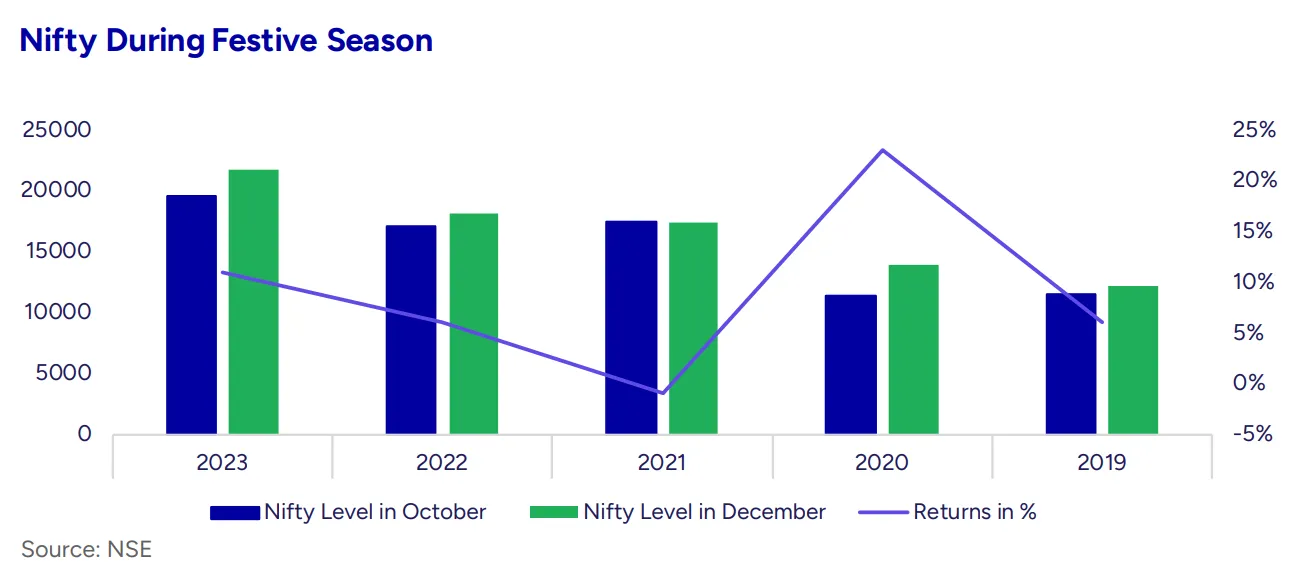
Festivals like Diwali and Dusshera are usually followed by the wedding season with many Indians spending on gifts, decor, jewellery, fuelling massive demand & consumption across sectors. Indian wedding season peaks twice a year—from November to mid-December and mid-January to July. These periods also align with high economic activity, particularly during the first season, which overlaps with major festivals.
Sector report: Indian Wedding Sector Report (market size, drivers, regulation, risks and listed companies).
Wedding Season 2026: Latest Numbers
| Source | Figure |
|---|---|
| CAIT, 2026 season (21 Nov to 15 Dec 2026) | About 52 lakh weddings and Rs 7.5 lakh crore of business: Rs 4.05 lakh crore in goods and Rs 3.45 lakh crore in services. By category: jewellery Rs 1.2 lakh crore, apparel Rs 90,000 crore, catering Rs 75,000 crore, venues and hotels Rs 60,000 crore |
| CAIT, earlier seasons | 2024: 48 lakh weddings, Rs 5.9 lakh crore. 2025: 46 lakh weddings, Rs 6.5 lakh crore (1 Nov to 14 Dec) |
| Jefferies (2024 note) | Industry sized at about US$130 billion, roughly twice the US (US$70 billion) and below China (US$170 billion); average spend about Rs 12 lakh per wedding |
| WedMeGood Annual Report 2025-26 | Average wedding budget Rs 39.5 lakh, up 8% on the year; average wedding loan Rs 15.5 lakh; 89% of destination weddings held within India. The sample (2,000+ couples, 500+ vendors) skews to affluent online users, so it is not comparable with the Jefferies average |
CAIT's wedding counts cover only the Nov-Dec auspicious window, not the full year. There is no official annual count of weddings in India. Published estimates run from about 80 lakh to 1.3 crore a year.
Gold duty: the import duty on gold and silver was cut from 15% to 6% in July 2024, left unchanged in Budget 2026, and raised back to 15% on 13 May 2026. GST: jewellery remains at 3%; hotel rooms priced up to Rs 7,500 a night moved from 12% to 5% from 22 September 2025.
In today’s video, we will look at the wedding industry and see why this evergreen industry is expected to do well in the coming months.
Don’t forget to subscribe, like & comment on the video!
Check the macro backdrop
GDP, inflation, rates and more — India’s key economic indicators in one dashboard.
Market Analysis of Indian Wedding Industry
The Indian wedding industry is booming. It has bounced back stronger, growing at an impressive 7-8% annually. According to WedMeGood, the industry neared a remarkable $75 billion during the 2023-24 wedding season—a strong recovery since the pandemic. A survey of nearly 3,000 couples and 500 vendors showed a 15-22% year-over-year increase in business from 2022 to 2023.
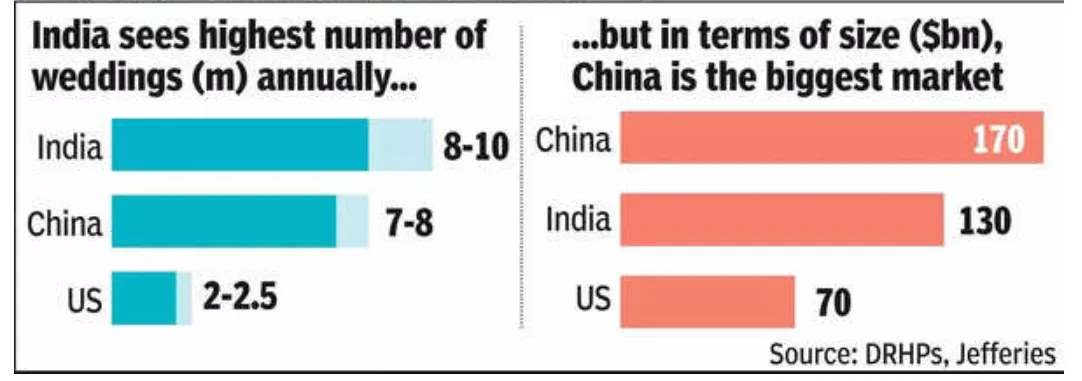
Published estimates of weddings in India run from about 80 lakh to 1 crore a year, with no official count. Jefferies sized the wedding industry at about US$130 billion in 2024, the second-largest consumption category after food and grocery. The industry employs a large number of people, from wedding planners and photographers to caterers, makeup artists, artisans and entertainers.
The impact extends beyond weddings, boosting allied sectors such as
Hospitality sector with hotel bookings for weddings reaching around $603 million annually.
Tourism sector draw more travelers, benefiting local economies
Retail sector with nearly $1.2 billion spent annually on wedding clothing and $7.2 billion on gold and jewelry.
Technology and logistics sectors
3 Growth Drivers Of The Indian Wedding Industry
First, . With increasing household income, families are ready to spend more on lavish weddings that reflect their social status, turning these events into grand experiences.
Celebrity culture also plays a big role. Bollywood and high-profile celebrity weddings set trends in fashion, decor, and overall wedding style. Couples now look to these weddings as inspiration, creating demand for luxury services that mirror the glamour of celebrity life.
Lastly, government initiatives like ‘Wed in India’ are promoting India as a top destination for weddings. With rising disposable income and social media influence, destination weddings are more accessible and attractive than ever.
Let’s look at each of these in more depth.
Changing Wedding Preferences Amid Rising Disposable Incomes
The wedding industry saw significant growth in 2023 as weddings became larger and more extravagant post the pandemic blues. Average guest size grew by nearly 15%, from 270 guests in 2022 to 310 in 2023. Celebrations also expanded, with couples now hosting an average of 4.2 functions, up from 3.2.
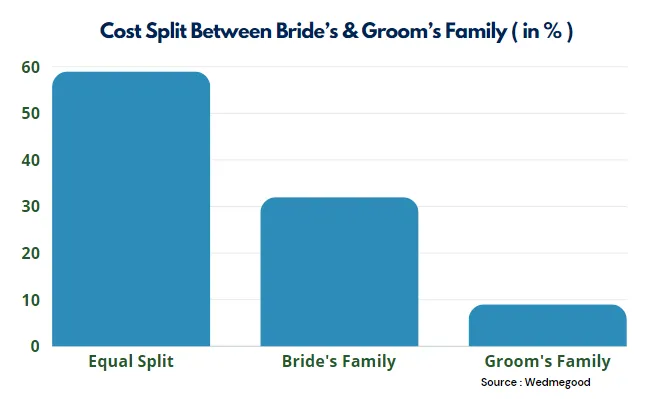
Expenses for weddings have historically been borne by the Bride’s family - we are seeing a changing pattern here largely in urban areas. Around 59% of wedding costs are split equally, but 32% still fall solely on the bride’s family.
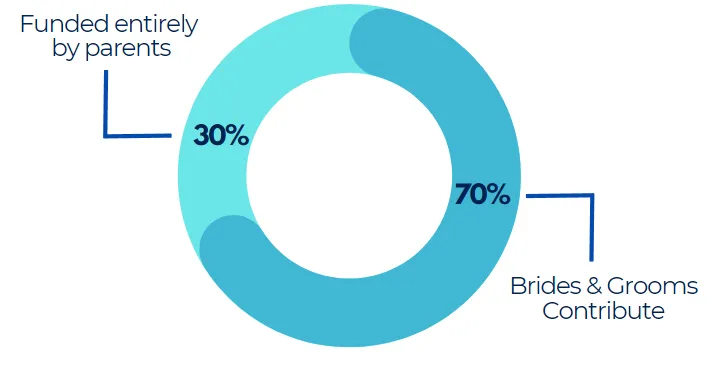
Millennial couples are more financially involved - in urban areas. 70% of brides and grooms now contribute financially, spending on meaningful experiences and luxury services like premium outfits, professional photography, honeymoons, and custom engagement rings.
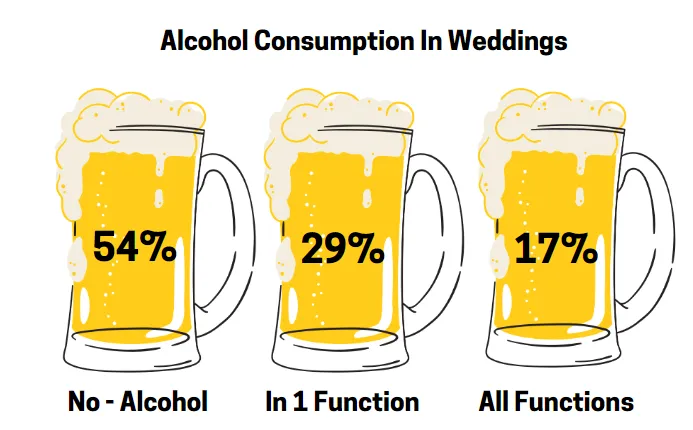
In terms of consumption, 54% of weddings remain alcohol-free, while 29% offer it selectively and 17% in all functions.
A trend in 2023 was the rise in artificial jewelry, with 36% of brides opting for it and 16% choosing rental options. This trend points to changing attitudes on ownership, with practicality often taking precedence over tradition.
Gold import duty was cut from 15% to 6% in July 2024 and raised back to 15% on 13 May 2026. Gold remains both an investment and a cultural purchase at weddings.
Get research like this in your inbox
The week’s research that mattered, in five minutes. Joined by 2L+ investors.
Luxury Spending Rises Amid Celebrity Culture
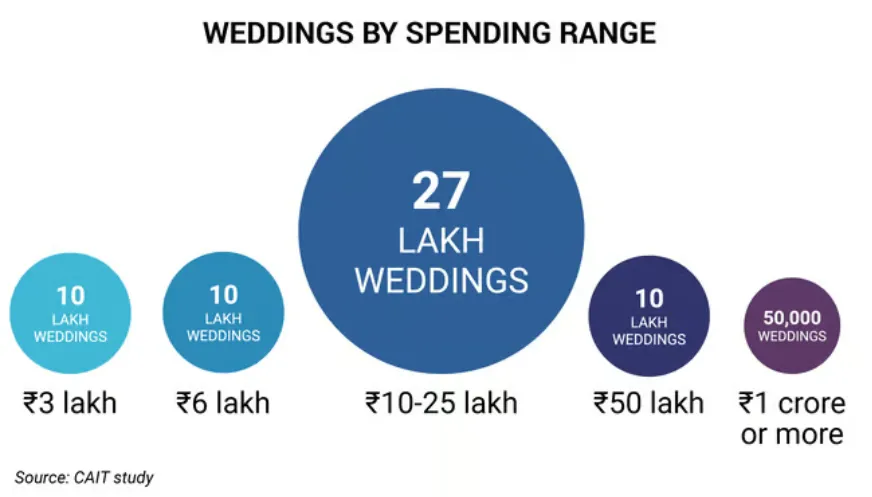
Luxury spending in India has grown beyond traditional limits. Where gold and luxury items once signaled exclusivity, today they’re more accessible, fueled by rising incomes and aspirations. India sees a large number of weddings across varied spending tiers. A significant 27 lakh weddings fall in the ₹10-25 lakh range, reflecting the popularity of mid-range wedding budgets. Smaller budgets like ₹3 lakh and ₹6 lakh account for 10 lakh weddings each, while high-end weddings costing ₹1 crore or more make up 50,000 weddings.
India’s luxury market is on track to triple, potentially reaching $85 to $90 billion by 2030. The rapid growth is driven by a growing middle class, expansion into Tier 2 and Tier 3 cities, and rising demand for entry-level luxury products.
India’s ultra-premium shopping malls are booming. Last year, JIO World Plaza opened, bringing luxury brands like Louis Vuitton, Gucci, and Cartier to the heart of Mumbai. Luxury homes in Delhi, Mumbai, and Hyderabad have seen record sales, while luxury car brands like Mercedes-Benz, Audi, and BMW reported strong growth in India’s market. Credit card spending, too, has surged, reflecting a growing appetite for premium products and experiences.
Watch our last video to understand more about luxury consumption.
Destination Wedding Heating Up
India is a prime location for destination weddings. From the majestic forts of Rajasthan to Kerala’s peaceful backwaters, Goa’s beaches, and the lush hills of Uttarakhand, couples are choosing unique, picturesque venues. With rising disposable income and social media influence, destination weddings are more accessible and attractive than ever.
Inspired by “Make in India,” Prime Minister Modi introduced “Wed in India,” urging wealthy industrialists to host destination weddings within India, particularly in Uttarakhand. This program aims to retain $12.1 billion within the country by promoting local wedding tourism.
The Ministry of Tourism’s wedding tourism campaign positions India as a top global wedding destination, moving beyond the "royal" wedding image to themes like Beach, Nature, Royal, and Himalayan weddings. This campaign showcases about 25 key destinations, offering couples a chance to create their dream weddings amidst India’s natural beauty.
Listed Companies Linked to the Wedding Season
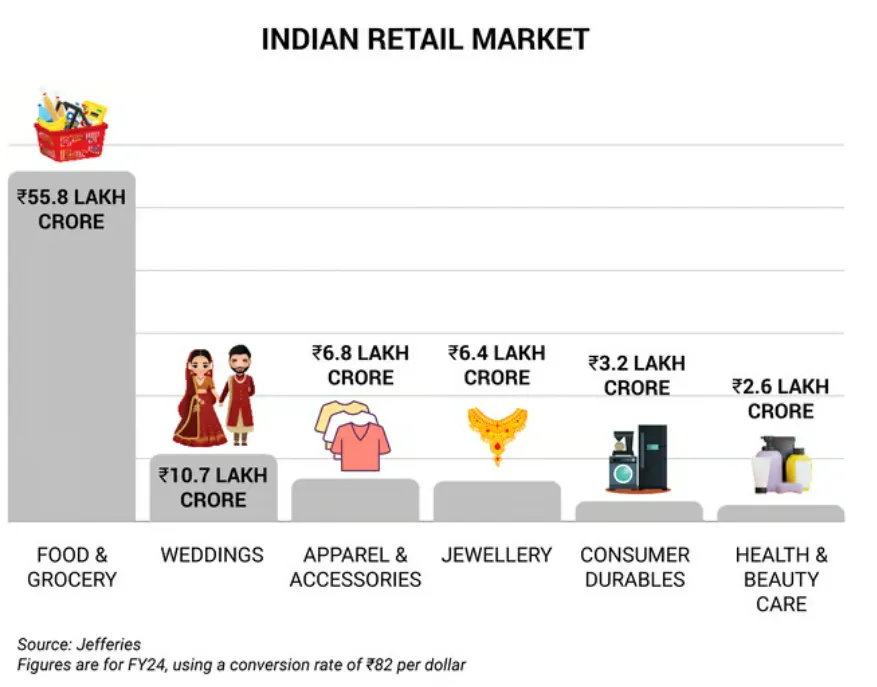
The wedding sector is valued at ₹10.7 lakh crore and second to only food and grocery. Other significant sectors related to wedding include apparel & accessories, home decor, jewelry, consumer durables and health & beauty care.
IHCL (Indian Hotels): Q2 FY27 revenue rose 21% to Rs 2,566 crore, and the company raised its FY27 revenue growth guidance from 12-14% to 15-17%, citing social and MICE events.
EIH (Oberoi, Trident): Q2 FY27 revenue rose about 16% to roughly Rs 694 crore, with MICE at 16% of room revenue against 12% a year earlier.
Titan: Q2 FY27 jewellery revenue rose 24% to Rs 17,495 crore. Reported profit included a Rs 536 crore gain from the gold duty increase.
Kalyan Jewellers: in its Q2 FY27 business update (7 October 2026) the company reported consolidated revenue up 26%, with same-store sales growth of about 20% (secondary-source figures).
Vedant Fashions (Manyavar): Q2 FY27 revenue rose about 2.4% and same-store sales fell 5.8%, which the company attributed to Navratri shifting from Q2 to Q3.
Large caps or small caps: who is winning?
Nifty, midcap and smallcap returns from one day to ten years, with the spread and valuation by segment.
Future of the Indian Wedding Industry
Estimates of weddings per year range from about 80 lakh to 1.3 crore, and there is no official count. The scale of the market is large, but the figures are estimates.
This growth is fueled by rising disposable incomes, a booming luxury market, and demographic trends, with millions reaching marriageable age in the next five years.
With international destinations vying for high-net-worth Indian weddings, the domestic tourism industry is recognizing weddings as a key attraction. Rising costs for overseas ceremonies are also encouraging more couples to choose Indian destinations.
CAIT's estimates of wedding-season business were Rs 5.9 lakh crore in 2024, Rs 6.5 lakh crore in 2025 and Rs 7.5 lakh crore for the 2026 season.
The future of the Indian wedding industry is bright, with rising demand for luxury, digitalization, and sustainability.
So what do you think about the Indian Wedding Industry? Let us know in the comments below.
Be sure to check out our other videos! You can also read find detailed analysis, blogs & reports on our website for more in depth information - links available in the description.
Don't forget to like, subscribe, and tap that notification bell to get more insights.
See you next time and happy investing!


