
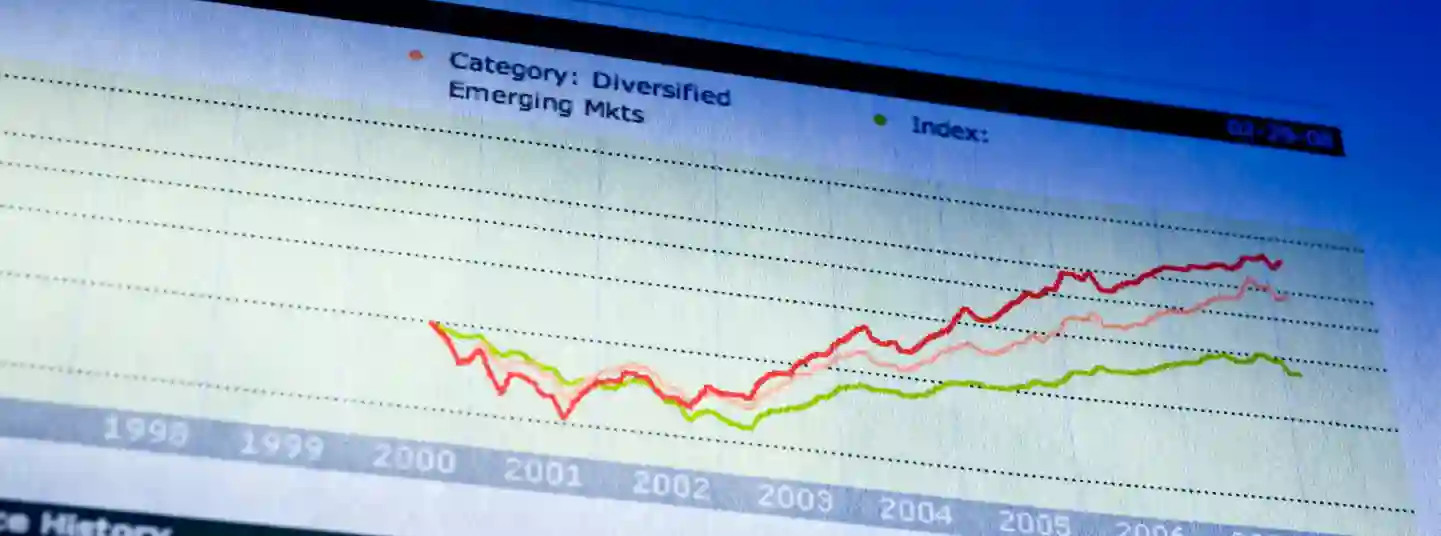
International mutual funds let Indian investors hold overseas securities through a rupee-denominated fund. Whether they are "worth it" depends on a person's goals, so this article does not give a verdict. It explains how the funds work, what limits apply in 2026 and how gains are taxed, using dated sources.
What are international mutual funds?
These schemes pool money and invest in stocks or bonds of companies outside India. Investors buy units in rupees; the scheme either invests directly in foreign securities or buys units of an overseas fund (a feeder or fund of funds structure). The unit value therefore moves with the foreign assets and with the rupee exchange rate. A fall in the rupee against the dollar raises the rupee value of dollar assets, and vice versa.
See what markets are pricing in
Live indices, sector moves and market breadth — the backdrop to every story we publish.
Types
- Single-country funds: track a market such as the US (S&P 500, Nasdaq 100) or China.
- Global or multi-country funds: invest across developed and emerging markets.
- Thematic or sector funds: technology, healthcare, ESG, etc.
- Index funds and ETFs: replicate an overseas index, usually at lower cost.
- Actively managed feeder funds: invest in an overseas fund run by a global manager.
Why people consider them, and the risks
Commonly cited reasons are access to companies and sectors not listed in India, geographic diversification, and currency exposure. The risks are equally standard: foreign market volatility, currency movements working in either direction, concentration in a few mega-cap stocks (for single-country index funds), a double layer of expenses in fund-of-funds structures, and tracking error.
Get research like this in your inbox
The week’s research that mattered, in five minutes. Joined by 2L+ investors.
The overseas investment limit in 2026
Mutual funds can invest overseas only within an aggregate industry limit of USD 7 billion, with sub-limits for overseas ETFs and per-fund-house caps. The cap dates from the RBI/SEBI framework (consolidated in a SEBI circular of June 2021) and, according to reports, has not been raised. When industry headroom runs out, fund houses stop taking fresh money.
Reports in 2026 say the limit was close to exhausted: Nippon India stopped fresh subscriptions in its international offerings from 21 April 2026, and Axis suspended fresh inflows into select overseas schemes from 6 May 2026; Kotak and other houses also paused or restricted inflows. The status of each scheme changes frequently, so the fund house's notice and AMFI/SEBI communications are the reliable sources. Existing unitholders can generally still redeem. Overseas ETFs and the Liberalised Remittance Scheme (LRS) are separate routes that are not subject to this mutual fund limit; LRS has its own annual cap per resident individual.
How to read a fund's factsheet
- Mandate and benchmark: which market or index, and in which currency.
- Structure: direct holdings or a feeder into an overseas fund, and the underlying fund's own expense ratio.
- Expense ratio and tracking difference against the benchmark.
- Top holdings and concentration in the portfolio.
- Subscription status: open, restricted (lump sum vs SIP) or closed.
Taxation as at FY 2026-27
Under the Income-tax rules summarised in the HSBC Mutual Fund tax reckoner for FY 2026-27:
| Fund category | Short-term gains | Long-term gains |
|---|---|---|
| Equity-oriented (at least 65% in listed domestic equity) | 20% (12 months or less) | 12.5% above Rs 1.25 lakh a year (more than 12 months) |
| Other than equity-oriented, not a specified mutual fund (this category covers most international equity funds) | Slab rate (24 months or less for unlisted units) | 12.5% without indexation (more than 24 months for unlisted units) |
| Specified mutual fund (more than 65% in debt and money-market instruments) | Slab rate | Slab rate regardless of holding period (units bought on or after 1 April 2023) |
The reckoner notes that the definition of a "specified mutual fund" has been the debt-based test described above from FY 2025-26. Older articles (including earlier versions of this one) described all international funds as taxed at slab rates because of the earlier "not more than 35% in domestic equity" test; that description is outdated. Tax positions for a particular scheme depend on its portfolio, so the scheme's own tax disclosure should be checked. Foreign tax on dividends in the underlying fund and the treatment of currency gains are not covered here.
Is your portfolio built for what’s coming?
Get a free AI-powered review of your holdings — risk, overlap and quality in minutes.
Frequently asked questions
Do international funds protect against a falling rupee?
They carry currency exposure, which can add to or subtract from returns in rupee terms. Exposure is not a guarantee of a hedge.
Are international funds still open for investment?
It varies by scheme and changes with industry headroom under the USD 7 billion limit. Check the fund house's latest notice.
Is a fund-of-funds more expensive?
It can be, because the investor bears the feeder scheme's expense ratio plus the underlying fund's charges.
Fund and AMC names above are given only as dated factual examples of subscription notices, not as recommendations.
Sources: news reports on 2026 AMC subscription pauses (Value Research and others); HSBC Mutual Fund Tax Reckoner FY 2026-27.
This article is for educational purposes only and is not investment advice.


