


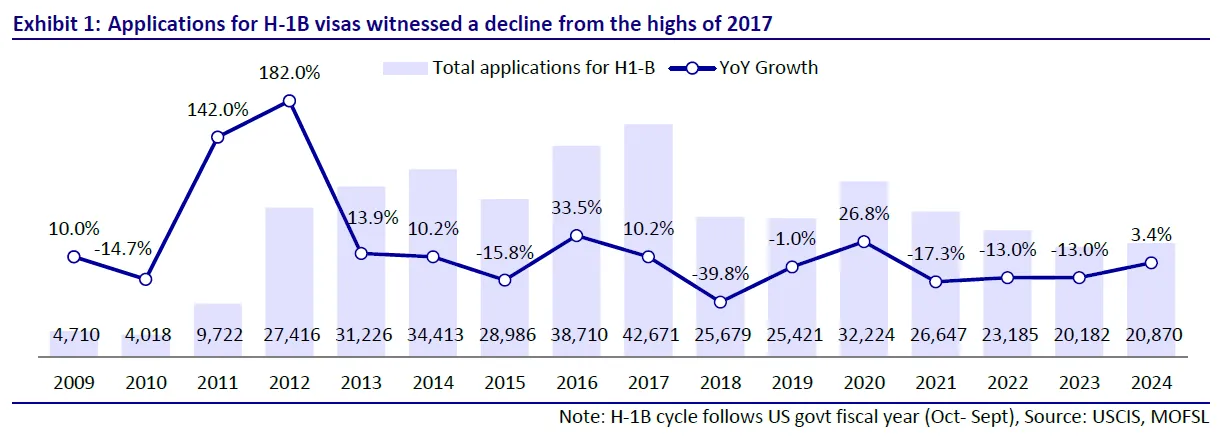
The H-1B visa programme is the best-known route through which Indian engineers and consultants work for US clients. In September 2025 a US presidential proclamation sought to raise the fee on certain new H-1B petitions from about USD 1,000 to USD 100,000 each. The measure was prospective, covering new petitions rather than existing visa holders. In 2026 it moved into the courts. This article sets out what changed, how Indian IT services firms are structured relative to visa dependence, and the channels through which a higher fee could reach the wider economy.
Where the policy stands (as of 23 Nov 2026)
- On 9 June 2026 a US District Court in Boston (Judge Leo Sorokin) ruled the USD 100,000 fee unlawful, reasoning that it imposes a tax on H-1B petitions without the authorisation of Congress (reported by All India Radio, Business Standard and others).
- The administration appealed. Reports in July 2026 (Jurist) say the appeals court declined to lift the block, so the fee remained blocked at that time. A December 2025 ruling by another judge had upheld the fee, so outcomes have differed between courts.
- The litigation may continue to higher courts. Readers should check the latest court and USCIS notices, as the status can change.
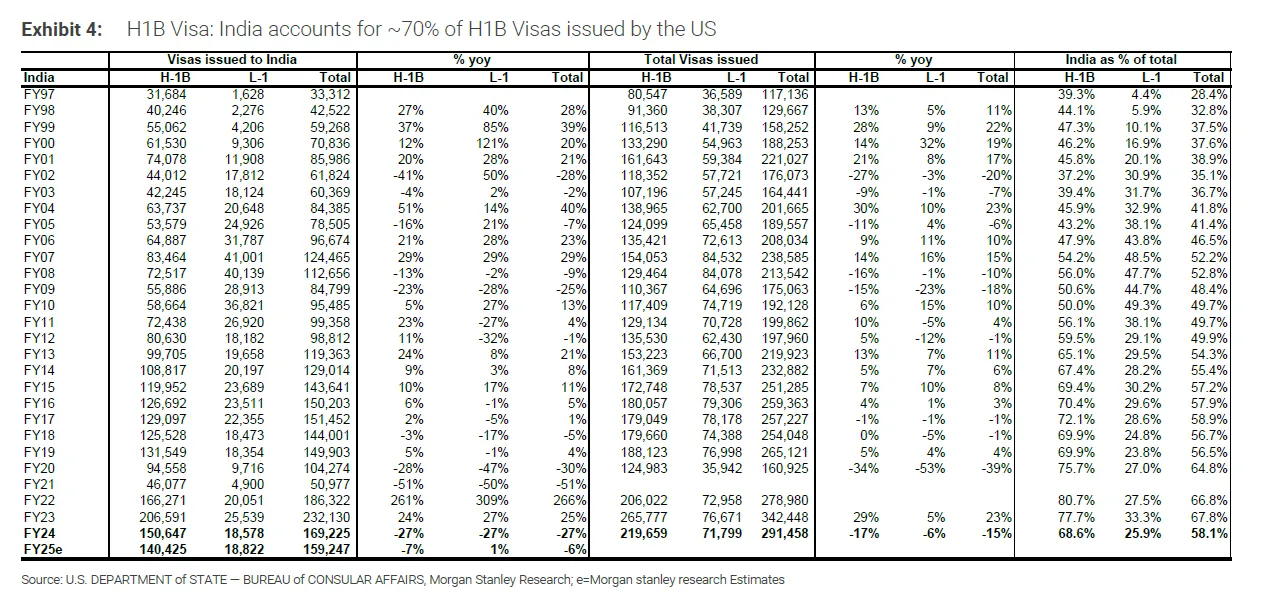
Whatever the legal outcome, the episode shows how sensitive Indian IT services are to US immigration policy. Roughly 70% of H-1B beneficiaries are reported to be Indian nationals.
See what markets are pricing in
Live indices, sector moves and market breadth — the backdrop to every story we publish.
How the fee worked
The fee was assessed per petition, not per year. With a standard three-year validity, the cost arises at the point of filing, so it is a lumpy upfront cost rather than an annual running expense. Illustratively, 5,000 new filings at USD 100,000 each would amount to USD 500 million. Because the fee applied to new petitions, staff already holding valid visas were not directly affected. H-1B petitioning is seasonal, so the first material effect would appear in the next filing window.
Indian IT: the starting point
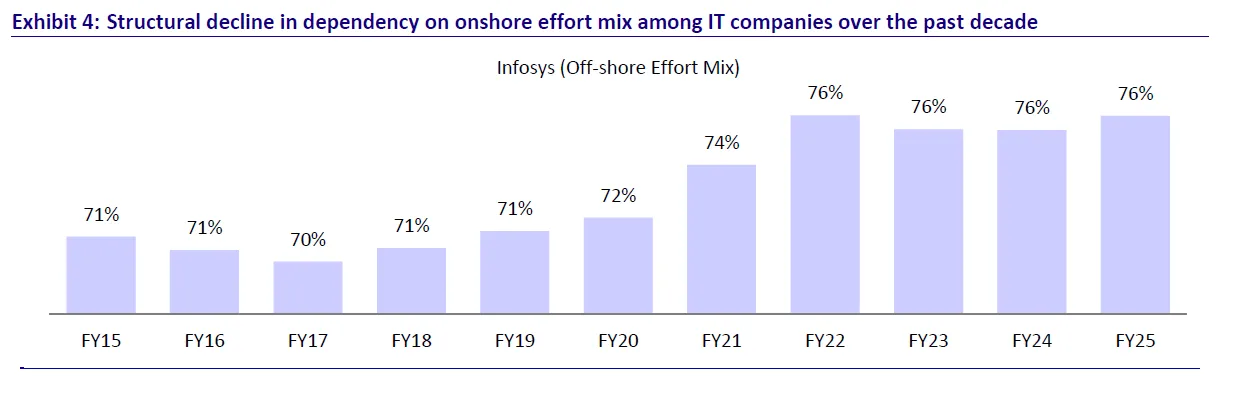
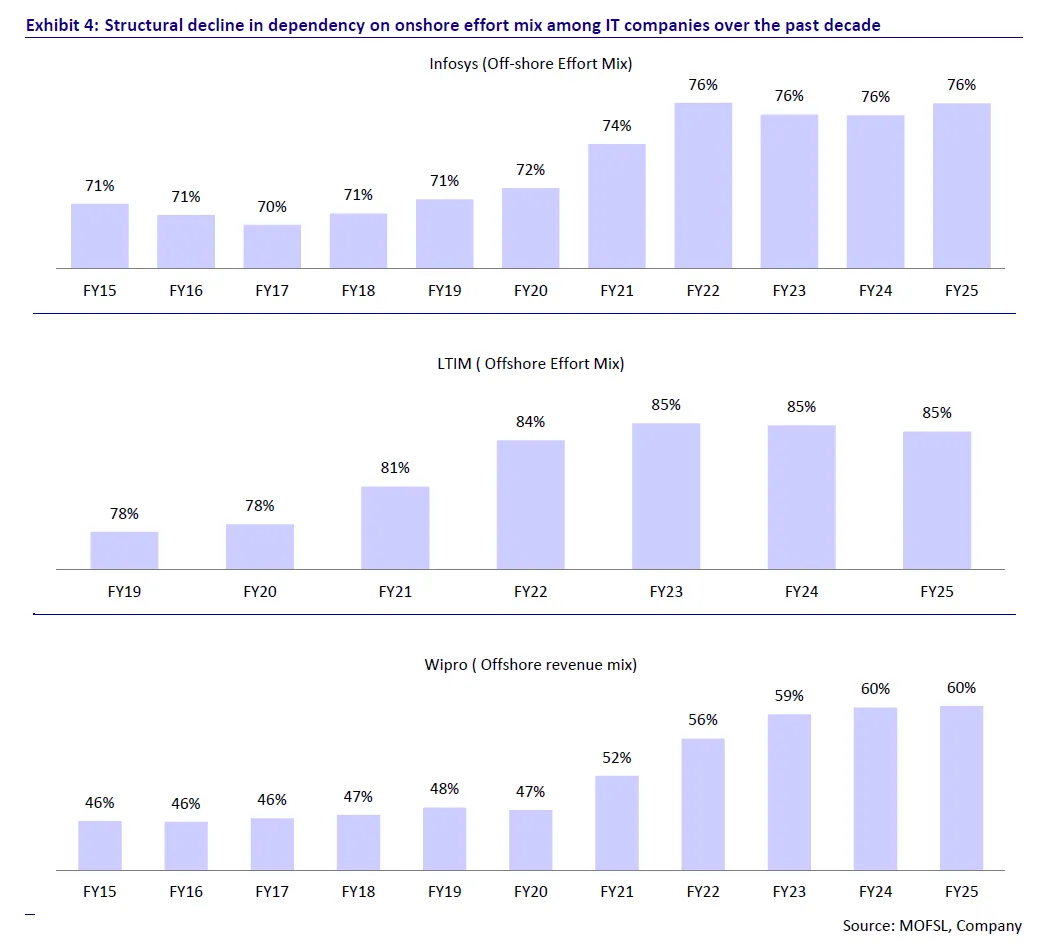
Large Indian IT vendors already run with a high share of offshore effort. Company disclosures show examples: Infosys's offshore mix rose from about 71% in FY15 to about 76% in FY25, and LTIMindtree's from 78% in FY19 to 85% in FY25 (figures from the company disclosures cited in the original analysis). Across large vendors, the on-site workforce is a minority, and H-1B holders are a smaller subset of that.
Exposure differs by company type
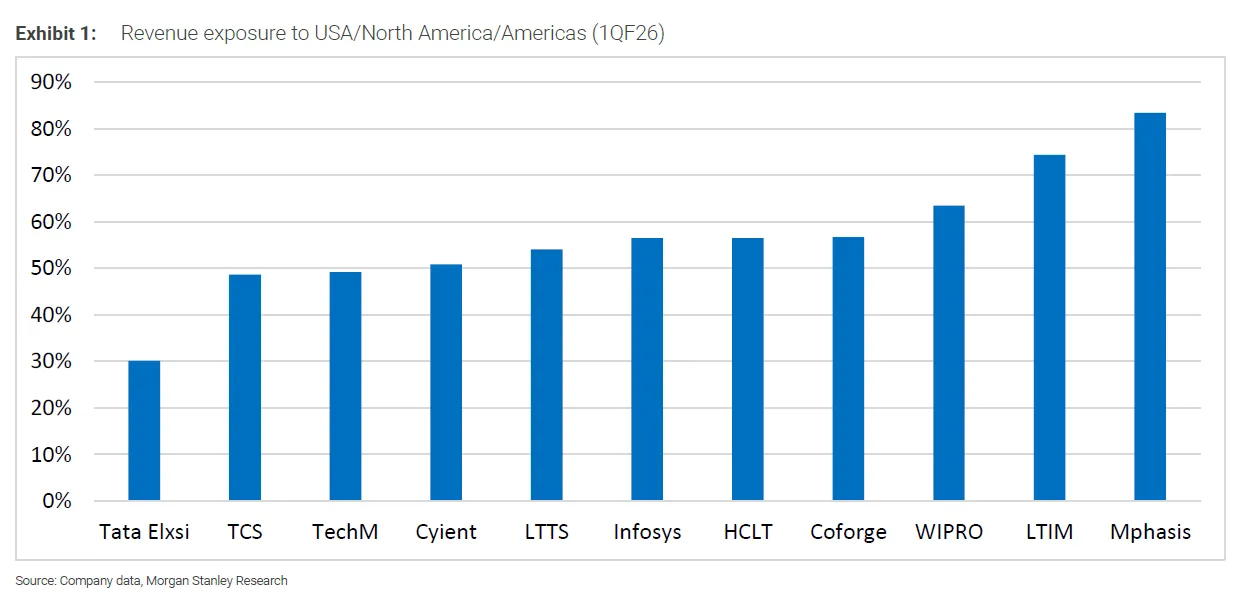
Dependence on visas varies with business mix. Firms with engineering R&D work, higher offshore intensity and deeper US local hiring are generally described as less sensitive; mid-sized firms with more on-site staffing and staff-augmentation work as more sensitive; and large vendors sit in the middle because of scale and pricing power. Revenue exposure to North America is a common proxy for this sensitivity.
H-1B is not only an Indian IT issue
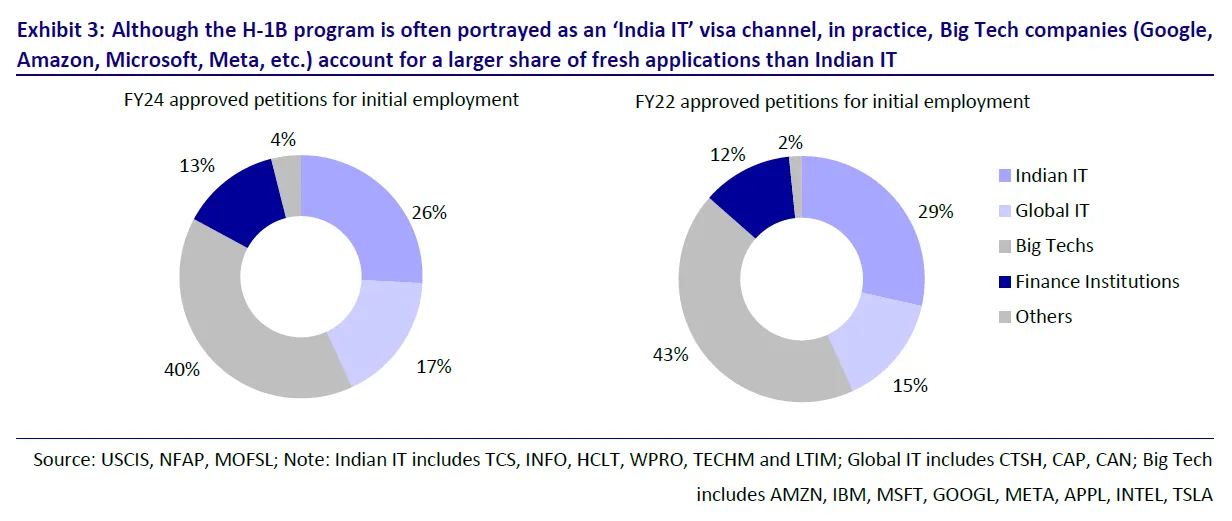
US technology companies, global integrators, banks and universities also file H-1B petitions, and published filing data show large US technology employers among the biggest sponsors. The programme therefore affects employers well beyond Indian outsourcing.
Get research like this in your inbox
The week’s research that mattered, in five minutes. Joined by 2L+ investors.
Channels of impact if a high fee applies
Operations
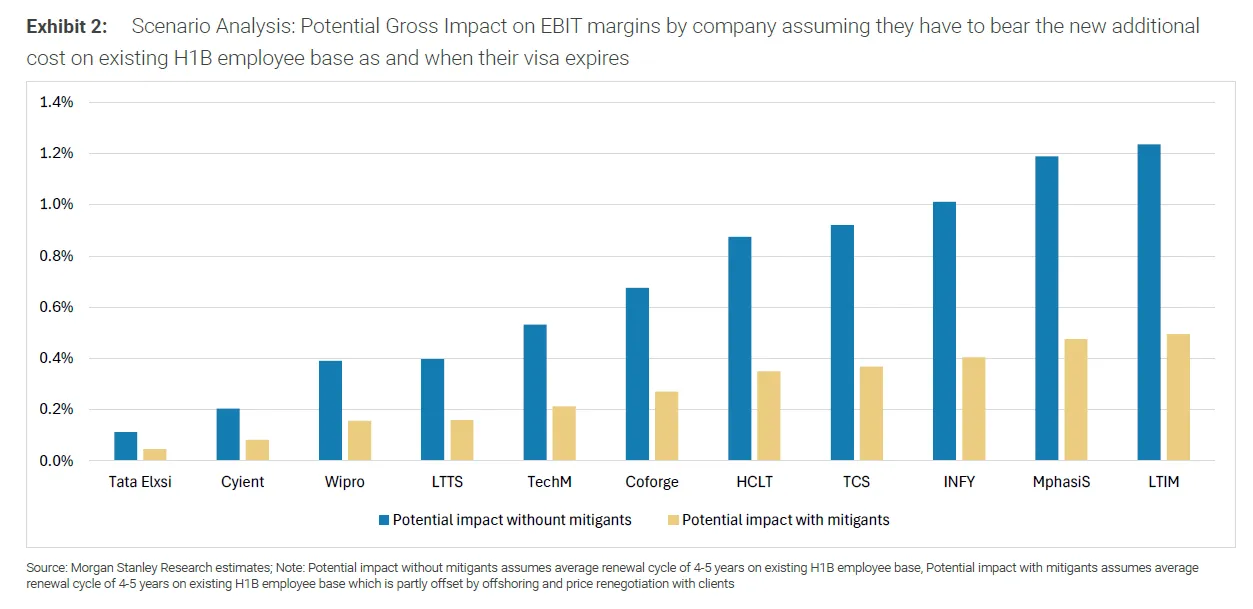
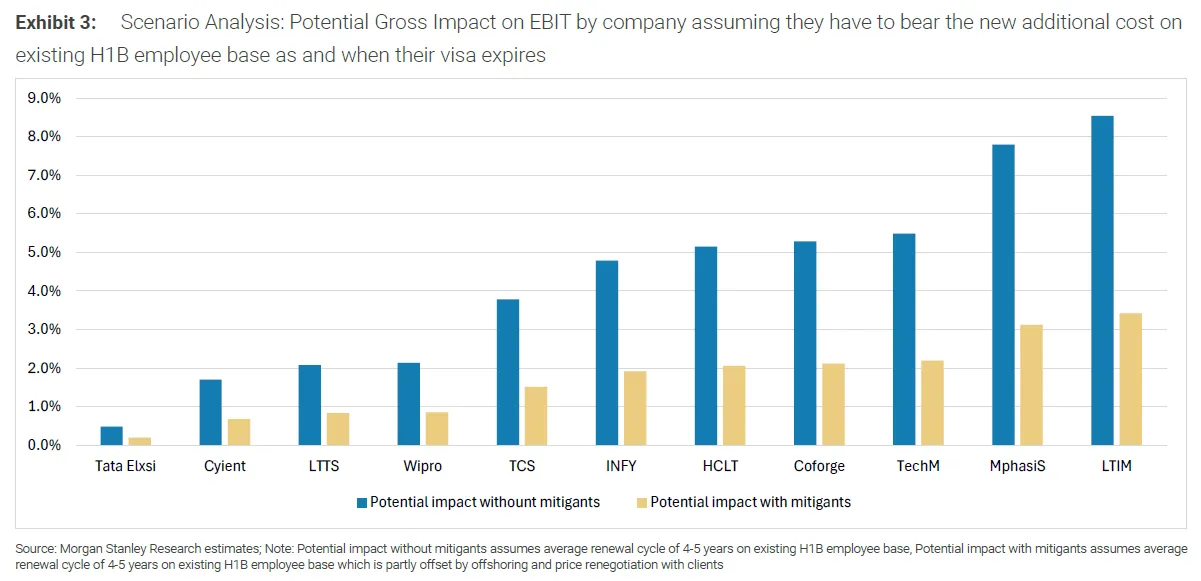
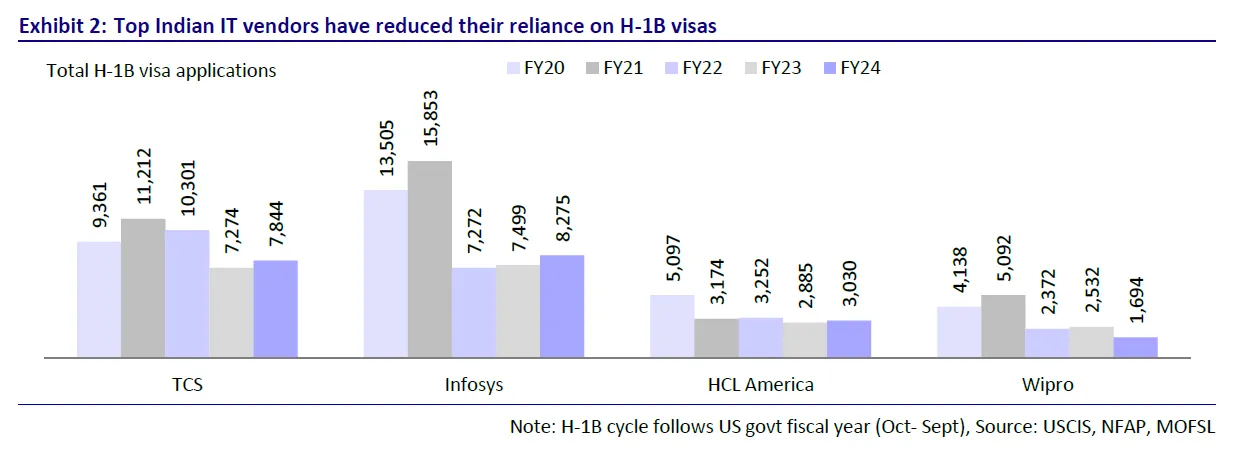
Vendors can respond by reducing new H-1B filings, hiring locally in the US, using near-shore centres, shifting work offshore and redesigning the delivery pyramid so that on-site roles are reserved for specialised work. Studies cited at the time of the proclamation modelled a gross operating-margin effect of roughly 10 to 120 basis points across coverage for a scenario in which a vendor kept its on-site H-1B population constant and paid the fee on replacements, with offshoring and pricing offsetting part of it. These were scenario estimates, not outcomes.
Pricing and revenue
Offshore delivery is typically higher margin, so a mix shift can cushion margins, while a reduced on-site presence can slow client engagement and large-deal wins. Which effect dominates depends on client pricing acceptance.
International students
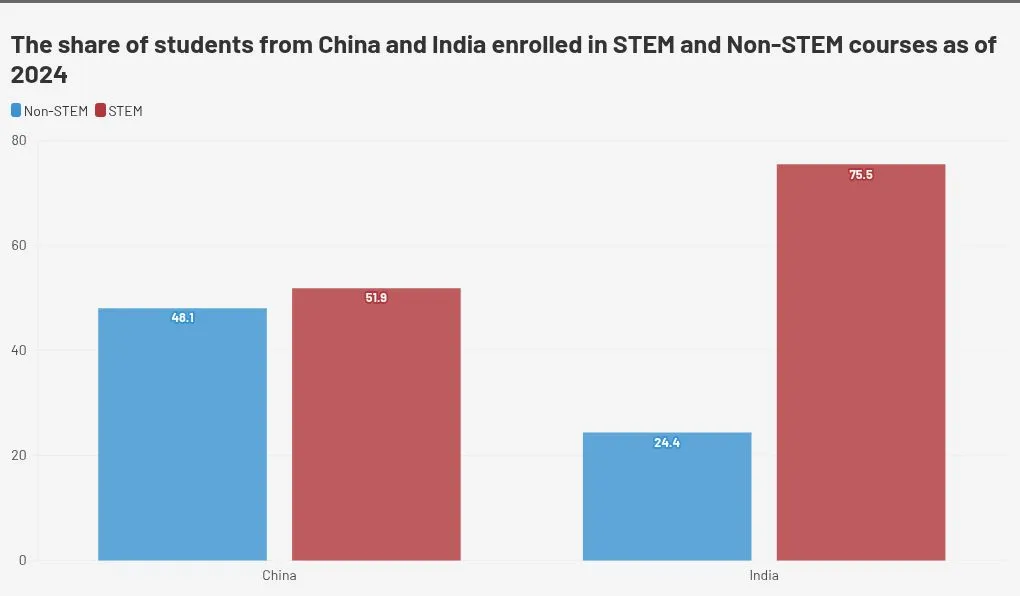
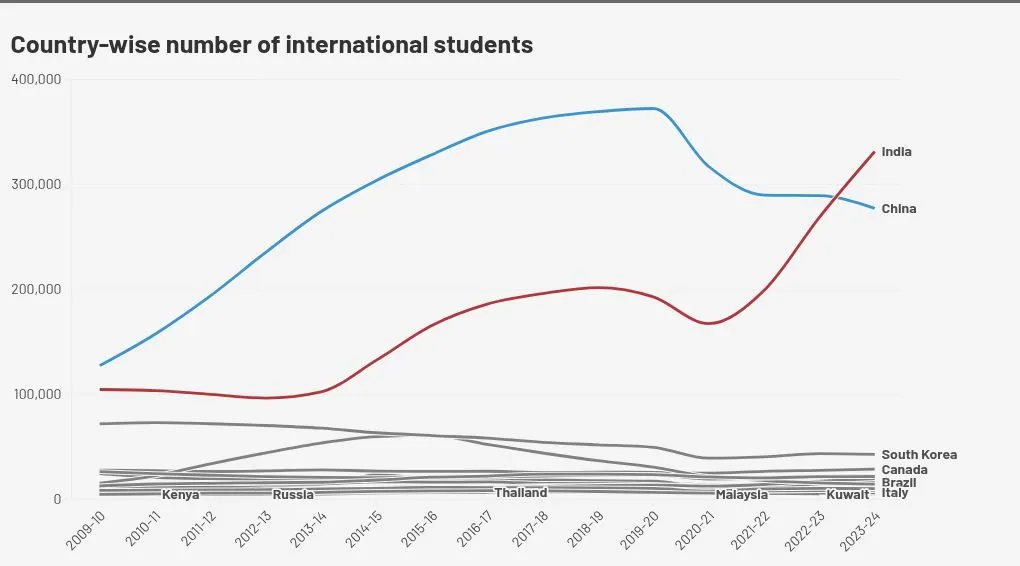
Over three-quarters of Indian students in the US study STEM subjects, and many seek H-1B sponsorship a few years after graduating. F-1 students moving to H-1B have accounted for a large share of new petitions, and Indians were about 57% of new H-1B beneficiaries in FY24 (USCIS data as cited in the original analysis). A higher fee raises the cost of that transition, which could influence enrolment decisions; international students were estimated to contribute about USD 44 billion to the US economy in the cited year.
Real estate and consumption
The links to Indian real estate and consumption are indirect. Fewer new H-1B migrants could soften incremental non-resident housing demand in some micro-markets, while more offshore delivery could add jobs in technology hubs such as Bengaluru, Hyderabad, Pune and Chennai. The net effect depends on the pace and scale of any shift, and is hard to separate from other drivers such as interest rates and the US demand cycle.
Macro context
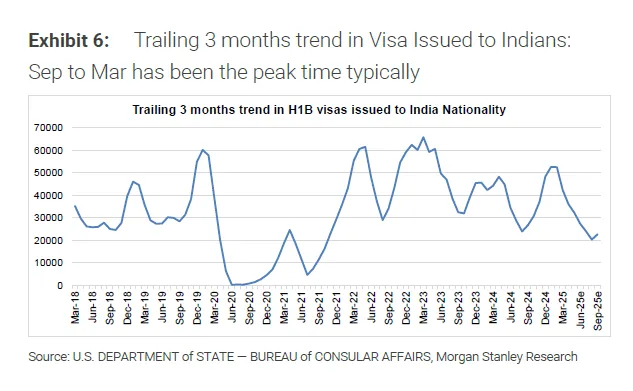
Visa issuance to Indian nationals typically peaks between September and March. Technology demand continues to be shaped by cloud, data, AI and cybersecurity projects; the offshore-deliverable portion is less exposed to on-site rules. US labour-market conditions and onshore wage bands also shape how costly local hiring is.
Is your portfolio built for what’s coming?
Get a free AI-powered review of your holdings — risk, overlap and quality in minutes.
Summary
The USD 100,000 H-1B fee was a large change in a policy that Indian IT had already been reducing its dependence on. As of the dates cited, a US district court had ruled it unlawful and the block was continuing on appeal. Company-level effects depend on offshore mix, on-site intensity and pricing power, and the legal position may still change.
Sources: All India Radio (9 Jun 2026), Business Standard (9 Jun 2026), Jurist (Jul 2026); offshore-mix figures from company disclosures as cited in the original article. Company references are factual examples, not recommendations.
This article is for educational purposes only and is not investment advice.


