


Thematic mutual funds invest across companies linked to one broad idea, such as digital adoption, defence manufacturing or energy transition. This article explains how they are structured, how they differ from sectoral, contra, focused and value funds, what SEBI's February 2026 rules say, and gives dated flow data from AMFI. It does not rank or recommend any fund.
What are thematic mutual funds?
A thematic fund invests across multiple sectors that share an economic idea. A digital-economy theme, for example, can include IT services, fintech, telecom and e-commerce companies. A sectoral fund, by contrast, holds one industry only, such as banking or pharma. SEBI places both in the single "Sectoral/Thematic" category, so the label does not tell a reader how wide the mandate is, and the scheme document and portfolio need to be read.
Because holdings are concentrated in a theme, these funds tend to move with that theme more than diversified funds. They also tend to be more volatile, and a theme can stay out of favour for long periods.
Run the numbers on your next investment
Project returns on a lumpsum or SIP with our free calculators.
Growth in thematic launches
AMFI's annual report for FY25 recorded 70 equity new fund offers, of which 52 were sectoral or thematic, raising Rs 73,633 crore (FY24: 37 such NFOs raising Rs 25,493 crore).
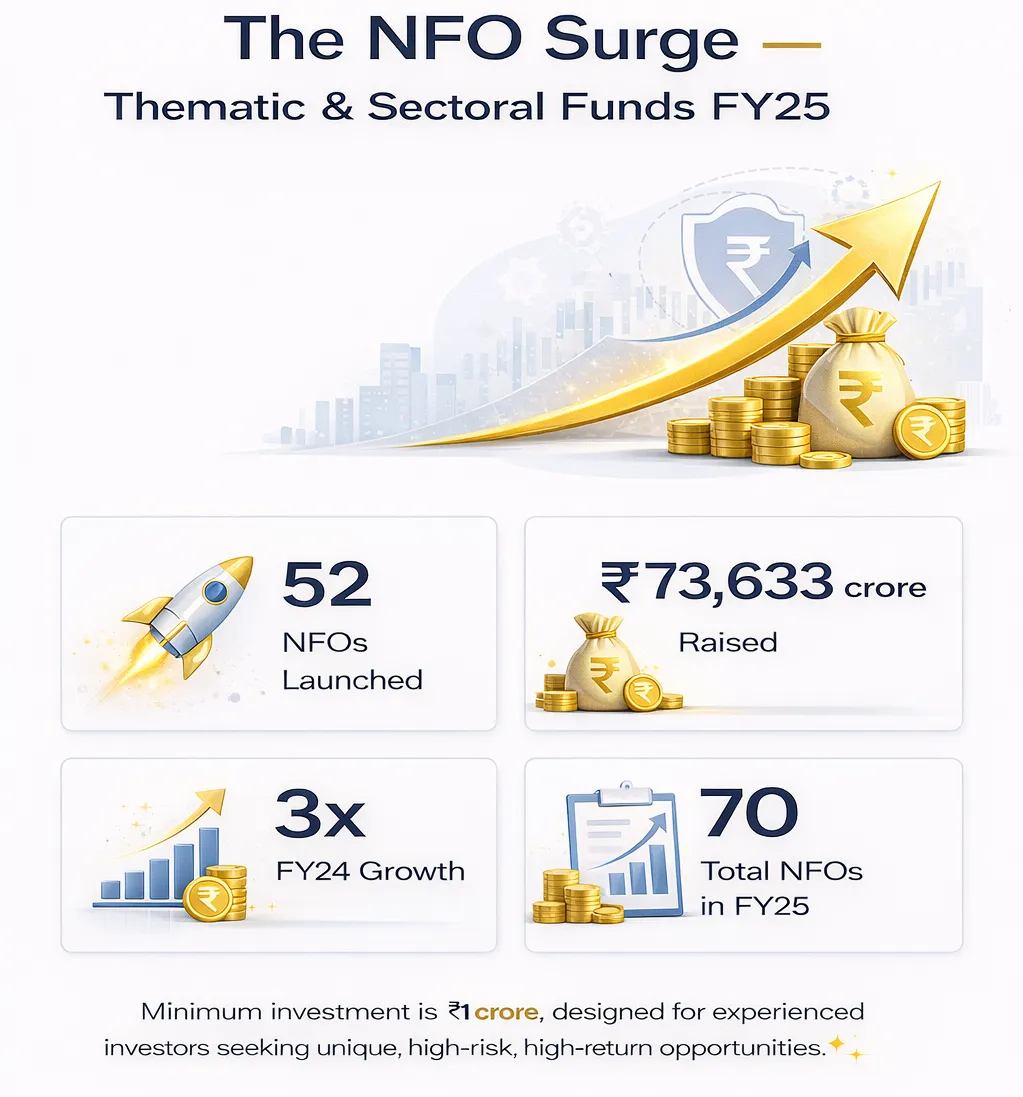
More recently, AMFI data for October 2026 showed combined net inflows of about Rs 1,714 crore into sectoral and thematic funds, down about 53% from Rs 3,640 crore in September 2026. Within that, thematic funds recorded about Rs 1,162 crore, focused funds about Rs 925 crore, value funds about Rs 556 crore and sectoral funds about Rs 552 crore, as reported from the AMFI release of 11 November 2026. Reports linked the drop to widely different sector returns that month.
Fund types usually grouped with thematic funds
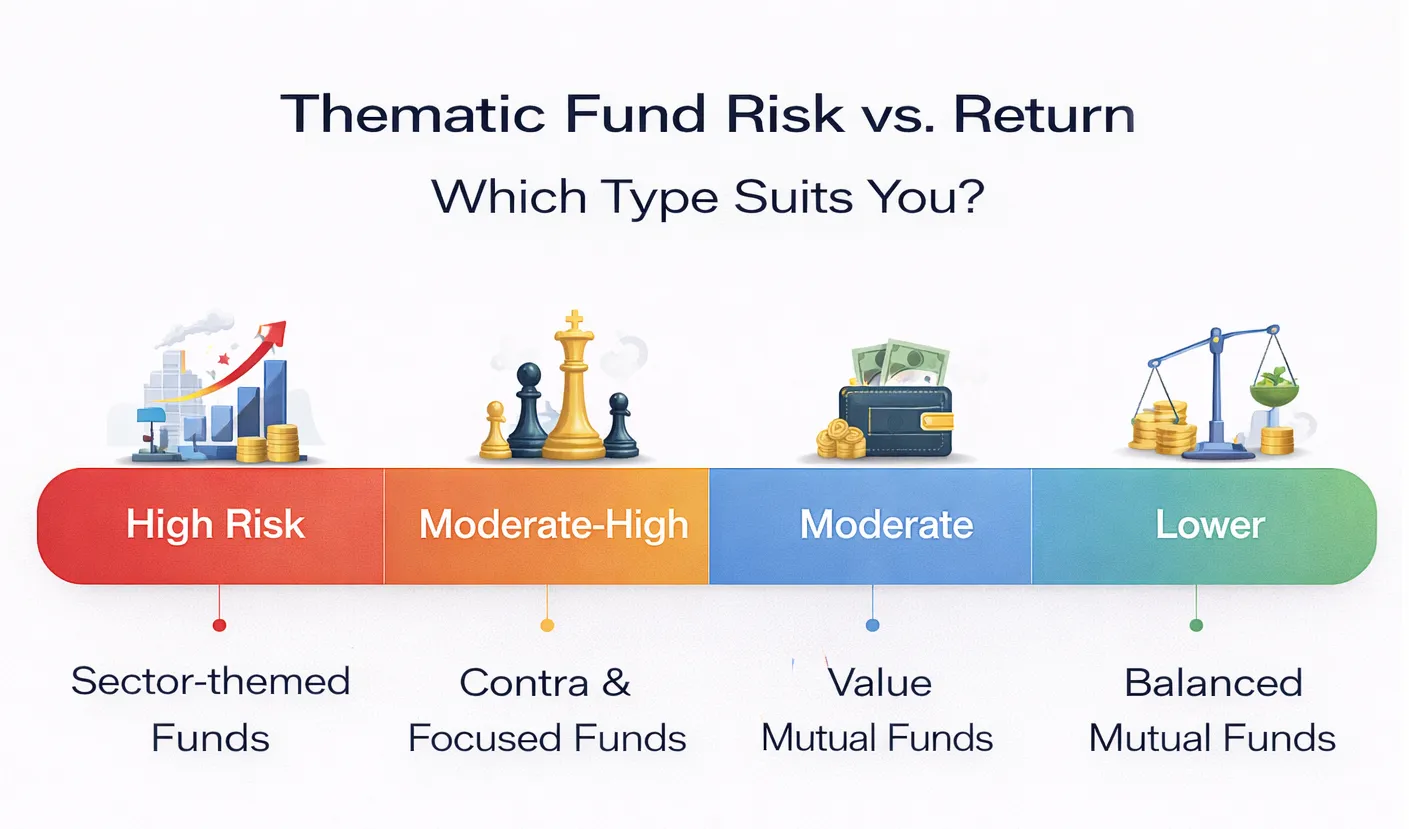
The following table describes the mandates. It is descriptive and does not suggest suitability.
| Type | Mandate | Key feature |
|---|---|---|
| Thematic | Companies linked to one theme across sectors | Theme-driven, concentrated exposure |
| Sectoral | Single industry | No ability to move outside the sector |
| Contra | Stocks currently out of favour | Style defined by the manager's view of undervaluation, mean reversion needs time |
| Focused | Maximum 30 stocks | Concentration limit set by SEBI categorisation |
| Value | Stocks trading below estimated intrinsic value | Uses metrics such as price-to-earnings, price-to-book or free-cash-flow yield |
Contra funds
A contra fund buys companies that the market is currently avoiding, on the view that the price falls short of business value. Historically in India, sectors such as PSU banks around 2017-18 and IT in 2022 saw extended periods of weak prices, which illustrates the type of situation contra mandates look at, though outcomes differ by period.
Focused funds
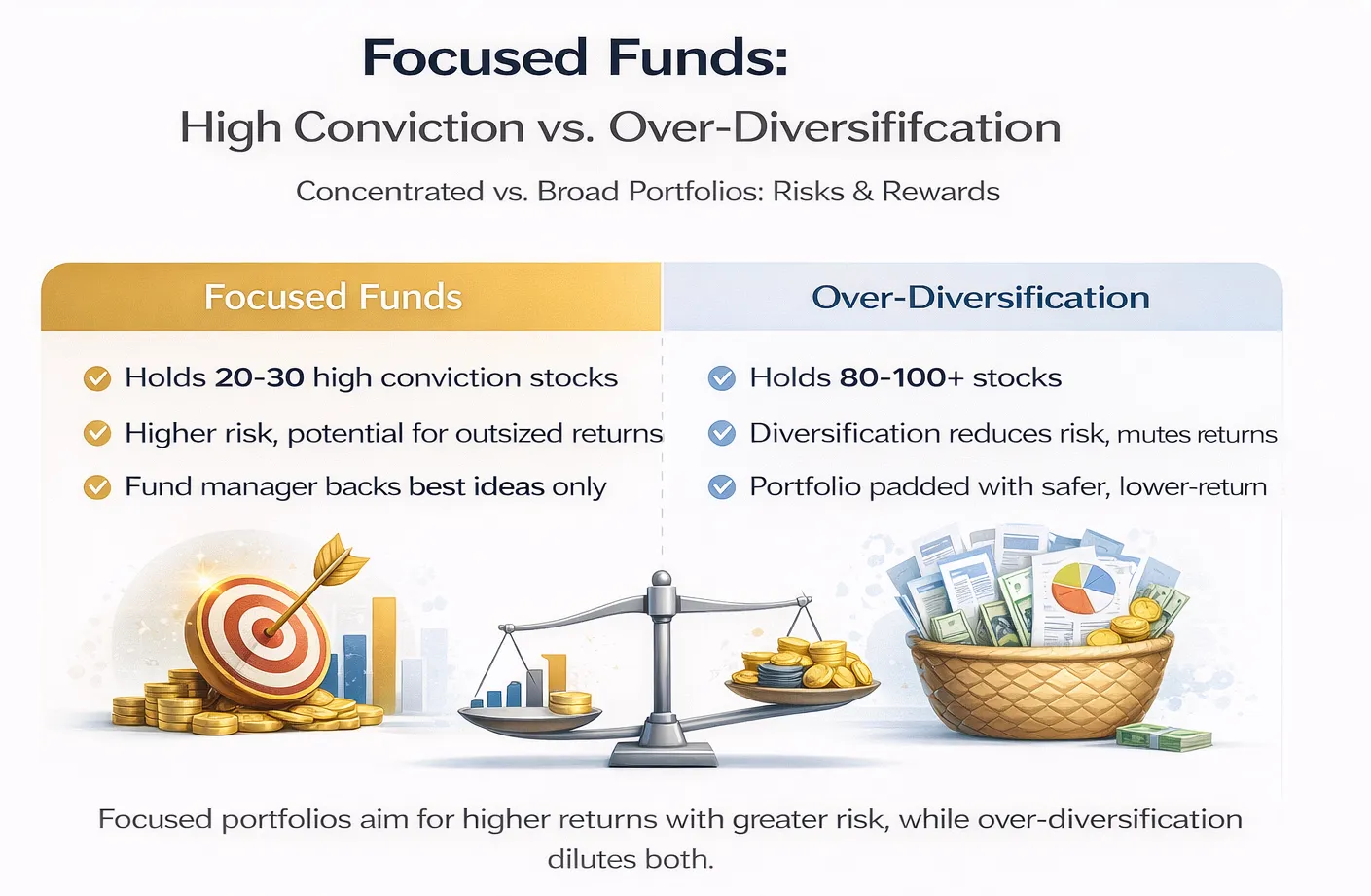
SEBI limits focused funds to 30 stocks. The compared benefit is that every holding weighs more in the portfolio, and the matching drawback is that a single holding's fall matters more. A diversified fund with 80-100 holdings spreads that impact.
Value funds
Value funds select stocks on valuation measures. The approach follows the value-investing ideas of Benjamin Graham, and in the research literature value is one of several documented return factors, along with momentum, quality and low volatility. Factor returns vary by period and can be negative for years.
Get research like this in your inbox
The week’s research that mattered, in five minutes. Joined by 2L+ investors.
SEBI rules on thematic and sectoral funds
On 26 February 2026 SEBI issued a circular on categorisation and rationalisation of mutual fund schemes. As reported by Angel One and other outlets:
- Portfolio overlap of a thematic or sectoral fund with other equity categories is capped at 50%, with large-cap funds excluded from the test.
- Thematic and value or contra funds may be offered together, but their holdings cannot overlap by more than 50%.
- Fund houses have a three-year compliance period; schemes that do not comply may have to be merged.
- Solution-oriented schemes (retirement and children's funds) were discontinued, and a new life-cycle fund category was introduced.
Media reports in June 2026 said SEBI was also considering a similar overlap limit for passive thematic and sectoral schemes. That was a report of consideration and not a final rule at the time of writing. The exact definitions and calculation method are in the circular on sebi.gov.in.
Factors usually reviewed when reading a thematic fund
- Scheme mandate: how narrow the theme is, and what the fund may hold outside it.
- Portfolio concentration: number of stocks and share of the top ten holdings.
- Overlap: how much the fund duplicates other equity holdings, which the 2026 SEBI rule now limits at fund-house level.
- Cycle position: thematic returns are usually clustered in a few years, so trailing returns can mislead.
- Costs and tax: expense ratio, exit load, and 12.5% long-term and 20% short-term capital-gains tax on equity-oriented funds (rates reported unchanged for FY 2026-27).
- Time horizon: themes often play out over many years and can include long drawdowns.
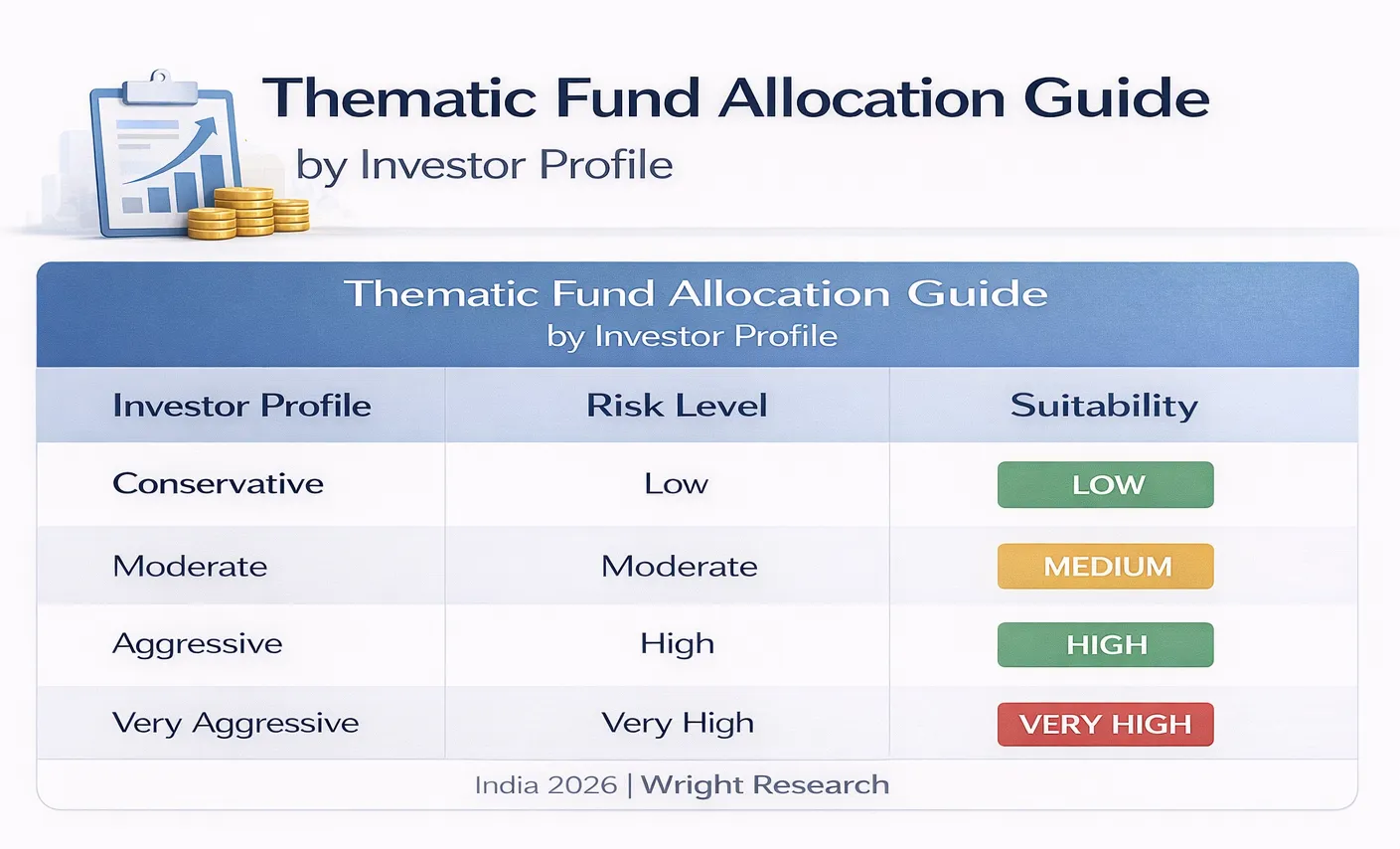
The graphic above is a general illustration from an earlier edition of this article and is not an allocation recommendation. Allocation depends on individual circumstances, which this article does not assess.
Where to find fund data
Scheme performance, holdings, expense ratios and AUM are published in monthly factsheets by each fund house and on the AMFI website. Wright Research's fund pages give category lists for thematic and contra funds. Names on such lists are screening outputs and not recommendations.
Scheme-level return and AUM figures from the earlier edition were removed because they could not be verified to a current date.
See what markets are pricing in
Live indices, sector moves and market breadth — the backdrop to every story we publish.
Frequently asked questions
How is a thematic fund different from a sectoral fund?
A thematic fund spans several sectors tied to one idea, while a sectoral fund is limited to one industry.
What is the portfolio overlap rule?
SEBI's February 2026 circular caps overlap of thematic and sectoral funds with other equity categories at 50%, with a three-year compliance period.
How are gains taxed?
Equity-oriented funds are taxed at 20% on short-term gains (12 months or less) and 12.5% on long-term gains above Rs 1.25 lakh a year, as reported for FY 2026-27.
Sources: AMFI Annual Report FY25; AMFI monthly data for October 2026 (released 11 November 2026) as reported by Upstox, Business Upturn and others; SEBI circular dated 26 February 2026 as reported by Angel One and Multibagg.
This article is for educational purposes only and is not investment advice.


